





Product request
You are looking for a solution:

Select an option, and we will develop the best offer
for you


How to Implement Remote Diagnostics for Set-Top Boxes to Reduce Support Workload

The IPTV and OTT market has long moved from experimentation to mass deployment, with thousands of subscribers now using set-top boxes every day. However, each device is a potential source of support requests.
When a user sees a blank screen, buffering, or application errors, the operator receives a call that requires time, attention, and a qualified specialist. And as the subscriber base grows, the load on technical support becomes one of the key operational challenges.
Remote diagnostics for set-top boxes make it possible to move a significant portion of routine operations from conversations with subscribers into an automated system. The operator gains access to the technical state of the device even before the customer fully describes the issue. This fundamentally changes the model of support: instead of lengthy questioning, IPTV device health monitoring ensures a quick analysis and a concrete solution.
What Remote Diagnostics Provide in Real Operation
Remote diagnostics are not just about log collection from set-top boxes, but efficient device lifecycle management through the continuous monitoring of device parameters: network connectivity, firmware status, application behavior, resource usage, and playback errors. The system forms a technical “profile” of every set-top box in the operator’s network for IPTV operator support optimization.
For the support team, this means shifting from subjective complaints to objective data when set-top box troubleshooting. When a subscriber reports a problem, the operator already sees what is happening with the device, such as whether it's connected to the server, whether the software version is up to date, and whether decoding errors are occurring. In many cases, using remote STB monitoring means that the issue is detected even before the call—based on anomalies in telemetry.
As a result, the average handling time is reduced, the number of repeat calls decreases, and on-site technician visits become less frequent. Technical support stops “fire fighting” and instead becomes a tool for managing service quality.
Solution Architecture: What the System Consists Of
At the core of remote diagnostics is an agent on the set-top box and a server-side centralized device management platform operated by the service provider or vendor. The agent collects data on system status, network parameters, and application performance, then transmits it over a secure channel. The frequency and volume of data are configurable depending on project requirements.
The server aggregates the data, stores history, visualizes metrics, and generates events. For the support team, this is usually a web interface with a device card that includes serial number, model, firmware version, IP address, connection status, and recent errors. The deeper the integration with CRM and billing systems, the faster operators can link technical data to a specific subscriber.
With IPTV device management, it's important that the architecture is scalable. Even a mid-sized operator works with tens of thousands of devices, and the system must process telemetry during peak hours without loss, while not creating additional load on the network and infrastructure.
Integrating Diagnostics into Support Processes
When looking to achieve proactive IPTV support, technology alone does not solve the problem unless it becomes part of everyday operations. In that regard, remote diagnostics should be the first step in handling any request. A support agent opens the subscriber’s profile and immediately sees the current state of the set-top box instead of starting with basic questions about cables and reboots.
Over time, standard scenarios emerge: if there is no connection—remotely restart the network interface; if the firmware is outdated—initiate an update; if an application fails—clear the cache or reinstall it. Actions such as a remote reboot and configuration can be automated and performed without operator involvement.
This approach lowers the requirements for the skill level of first-line support. Through the use of these set-top box monitoring tools, specialists no longer work “blindly” but rely on concrete indicators. This speeds up onboarding of new employees and makes service quality more predictable.
Security and Subscriber Trust
Of course, any system that remotely manages user devices raises security concerns. Operators must ensure secure data transmission, proper authentication of set-top boxes, and role-based access control within the company. Diagnostics should never become an infrastructure vulnerability.
The user perspective is equally important. Subscribers need to understand that remote access is used solely to support the service. Experience shows that transparent communication reduces resistance: the interface can display the operator connection status when dealing with fault detection and alerts, and the user agreement can clearly describe the purpose of diagnostics.
When customers realize that issues can be resolved without a technician visit or lengthy explanations, their trust in the service grows. Remote diagnostics begin to be perceived as a benefit rather than a form of control.
Economic Impact for Operators and Distributors
Reducing the load on technical support directly contributes to operational cost reduction. The number of requests decreases, average call time is reduced, and technician visits are required less often. At a scale of tens of thousands of subscribers, the savings become noticeable within the first months.
For distributors and integrators, having built-in diagnostics increases the value of the solution. The operator receives not just a set-top box, but a tool for managing service quality. This simplifies deployment, lowers the entry barrier, and accelerates project launches.
In the long term, the data collected by the system and the use of IPTV device analytics helps improve the product by identifying problematic models, optimizing firmware, and predicting failures. The result is that remote diagnostics cease to be an auxiliary feature and become a strategic element of the IPTV/OTT ecosystem.
Implementing remote IPTV middleware diagnostics is a step from reactive support to proactive issue resolution and service management. For operators, predictive maintenance for IPTV hardware means stability and scalability. For distributors, it's a competitive advantage, while for subscribers, it means a faster and higher-quality experience.
In a growing market, these tools for IPTV fleet management determine who can maintain service quality as the audience expands.
Recommended
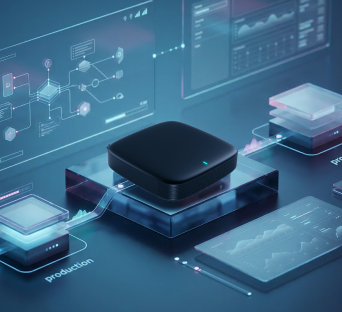
How to Properly Build a Staging Environment for Testing IPTV Updates
Any update in an IPTV ecosystem affects more than just one component. Changes in set-top box firmware, the client application, middleware, or content delivery logic can impact authentication, channel launch, EPG, VoD, DRM, and even network stability on the subscriber device side.

B2B niches for IPTV: from hotels to corporate TV
IPTV is increasingly going beyond the boundaries of the classic operator business and consumer TV. For the B2B segment – from hotels and business centers to medical facilities and corporate offices – IPTV is becoming a tool for service, communication, and attention management.
Single Sign-On in IPTV: Simplifying Access Without Compromising Security
The IPTV and OTT market has long moved beyond the idea of content only being viewed on a single screen.