








Product request
You are looking for a solution:

Select an option, and we will develop the best offer
for you


How to Design an IPTV Platform With Fault Tolerance in Mind From Day One
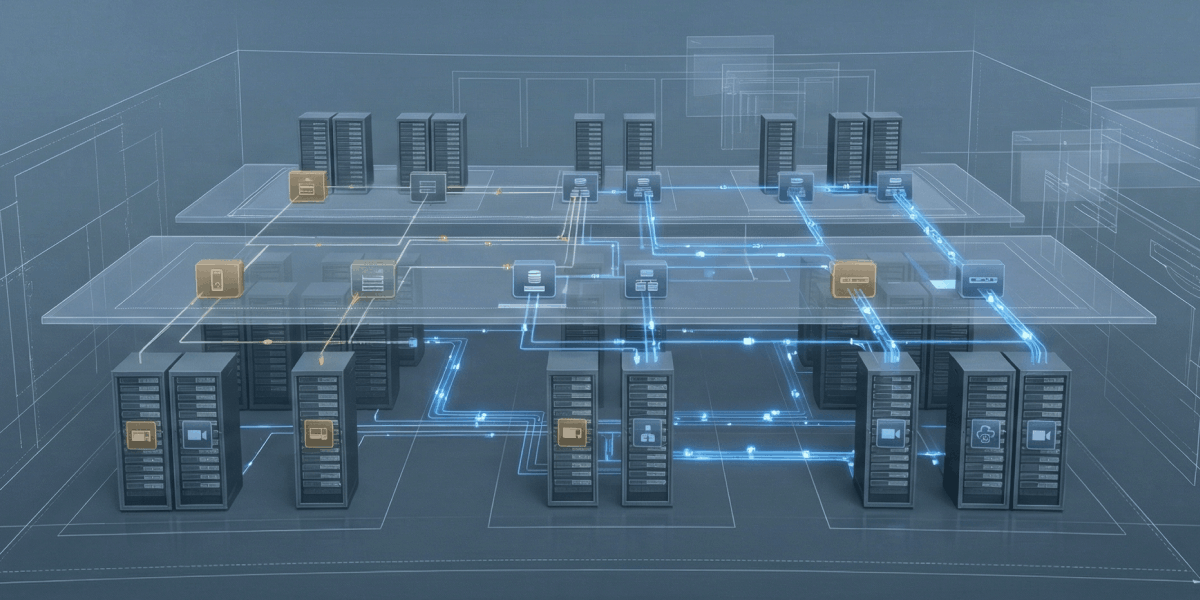
IPTV has long ceased to be an experimental technology. For subscribers, it's a basic service that is expected to work as reliably as electricity from a wall socket. Any outage instantly turns into a negative experience, user churn, and pressure on the operator. That's why fault tolerance today is not an “extra feature” but the foundation of resilient IPTV architecture.
The problem is that many projects start with functionality and speed to market, with stability only being considered later. But a platform that is not designed for failures, scaling, and graceful degradation will inevitably hit its limits. Fixing architectural mistakes in a live system is expensive and risky, so it's imperative that IPTV fault-tolerant design is built in from the very first day.
Failure as the norm, not the exception
Any distributed system will sooner or later face failures: disks break, network links go down, nodes become overloaded, human errors occur. The question regarding disaster mitigation in IPTV is not whether a failure will happen, but how the system will behave when it does. A mature IPTV platform assumes that failure is a normal state of the environment.
The architecture should support degradation instead of collapse. If one service is unavailable, the user should still see the interface, some channels, and the archive. Even partial functionality significantly reduces frustration and gives the operator time to recover.
Component separation as the basis of resilience
Monolithic solutions are easier to launch, but they handle failures poorly. A modern IPTV platform should be built from independent components: billing, middleware, EPG, CDN, DRM, and analytics. Modern redundancy planning for operators emphasises that each of them must be able to operate autonomously and have backup instances.
This approach to IPTV operator infrastructure allows problems to be isolated. For instance, a failure in the recommendation system should not affect channel playback. A portal overload should not disrupt set-top boxes. The weaker the coupling between modules, the higher the chance that IPTV service reliability will be maintained and that the platform will continue to function even under abnormal conditions.
Data as the most vulnerable asset
Content can be re-encoded, services can be restarted, but lost data is often impossible to recover. For IPTV this is especially critical in terms of user accounts, subscriptions, viewing history, and archive recordings. For IPTV platform planning and design, it's important to define in advance which data is “golden” and ensure multi-level protection.
This is not only about backups, but also real-time replication, geo-distribution, and testing recovery scenarios. To ensure fault-tolerant streaming, the system should regularly “rehearse” disasters such as data center outages, cluster loss, and storage corruption. Without these drills, fault tolerance remains only a theory.
Scaling without pain
Subscriber growth is desirable but dangerous. A platform that does not have risk-management IPTV services or is not designed for horizontal scaling starts to “crack” at the very moment of success. In IPTV, this shows up as slow interfaces, stream interruptions, and authorization issues.
A proper architecture assumes that any layer of the system can be expanded with multi-node IPTV deployment: CDN, middleware, databases, API services. It's crucial that this happens without service interruption. Then peak loads including sports events, major updates, and marketing campaigns do not become stress tests for the entire company.
Monitoring as part of the product
Fault tolerance is impossible without transparency. IPTV infrastructure monitoring is essential, and means that the platform must report its own condition: metrics, logs, alerts, user-side errors. This is not an internal tool, but part of the product that directly affects service quality.
When an operator sees degradation before subscribers notice it, their proactive failure detection approach will result in IPTV uptime optimization. Automated scenarios—service restarts, traffic switching, isolation of problematic nodes—turn incidents from disasters into routine events.
Where IPTV Architecture Breaks Most Often — and Which Practices Truly Improve Platform Resilience
Instability in IPTV projects most often appears where architectural compromises are made for the sake of fast launch: tighter coupling between components and the presence of hidden single points of failure. In practice, this looks like a “convenient monolith” or a “single database / single middleware node” that is hard to scale and that pulls the entire service chain down during an outage. Industry reliability guidelines explicitly recommend designing systems to avoid single points of failure and to distribute load and components across independent failure domains (zones/regions); otherwise, any infrastructure incident turns into a full service outage.
The issues that “surface” after a year of operation are most often embedded at the stage of the first architectural decisions and initial production rollout—when full observability is not yet in place, target SLOs and latency budgets are undefined, and degradation and disaster recovery scenarios are not rehearsed. In distributed systems, cascading failures are especially dangerous: one slow or unstable service starts overwhelming others with retries and timeouts. To prevent this, the industry relies on patterns such as the circuit breaker, which stops requests to an unstable dependency after error thresholds are exceeded, preventing the problem from spreading through the system.
When designing a platform, operators often underestimate not the “failure of a single server,” but more complex scenarios: network degradation, partial dependency outages, configuration errors, resource exhaustion, and “gray failures” where a service is technically alive but no longer copes with load. This is why mature reliability practices increasingly apply chaos engineering—the controlled injection of failures in pre-production or limited production environments—to observe how the system behaves under real-world conditions and to teach it to recover.
The transition from local IPTV to a hybrid IPTV/OTT model shifts priorities: the role of ABR delivery, the CDN layer, and failover mechanisms “on the path to the viewer” increases. Resilience is no longer achieved by protecting only the “core”—it requires reliable edge delivery, as well as switching between delivery providers (multi-CDN) and quality control at the stream level. The very logic of CDN—geo-distributed delivery closer to the user—aims to reduce latency and increase resilience, while multi-CDN is commonly viewed as a reliability practice through provider redundancy.
From a metrics perspective, problems are best “predicted” not by dozens of local indicators, but by high-signal metrics tied to what users actually experience. In Google’s SRE approach, these are the four “golden signals” of monitoring: latency, traffic, errors, and saturation—they quickly reveal where degradation begins and what is constraining the system. At the same time, an “illusion of control” is often created by metrics for the sake of metrics (for example, average CPU usage without context, “averaged” latencies without percentiles, or beautiful dashboards disconnected from the user journey).
The minimum set of practices required to prepare for 5–10x growth usually boils down to a few core principles: eliminate single points of failure through redundancy and distribution across zones/sites, automate recovery, isolate failure domains, and ensure observability through the “golden signals.” These approaches are directly reflected in the reliability recommendations of major cloud platforms and can serve as a reference model for designing IPTV/OTT architectures regardless of the specific technology stack.
From resilience to trust
A fault-tolerant IPTV platform is not a collection of expensive technologies, but a way of thinking. It starts with accepting that failures are inevitable and ends with a system that can survive in a real, imperfect world. Streaming continuity strategies should focus not just on servers and clusters, but also on processes, culture, and team maturity.
By designing a platform with over-the-air failover in mind from day one, an operator invests not just in stability, but also in the trust of subscribers and partners. In a world where content is available everywhere, IPTV network resilience and reliability become the factors that separate a professional service from a temporary solution.
Recommended

How to Properly Build a Staging Environment for Testing IPTV Updates
Any update in an IPTV ecosystem affects more than just one component. Changes in set-top box firmware, the client application, middleware, or content delivery logic can impact authentication, channel launch, EPG, VoD, DRM, and even network stability on the subscriber device side.

B2B niches for IPTV: from hotels to corporate TV
IPTV is increasingly going beyond the boundaries of the classic operator business and consumer TV. For the B2B segment – from hotels and business centers to medical facilities and corporate offices – IPTV is becoming a tool for service, communication, and attention management.

Single Sign-On in IPTV: Simplifying Access Without Compromising Security
The IPTV and OTT market has long moved beyond the idea of content only being viewed on a single screen.