








Product request
You are looking for a solution:

Select an option, and we will develop the best offer
for you


Role-Based Access Control in IPTV Projects: Why Operators Need It
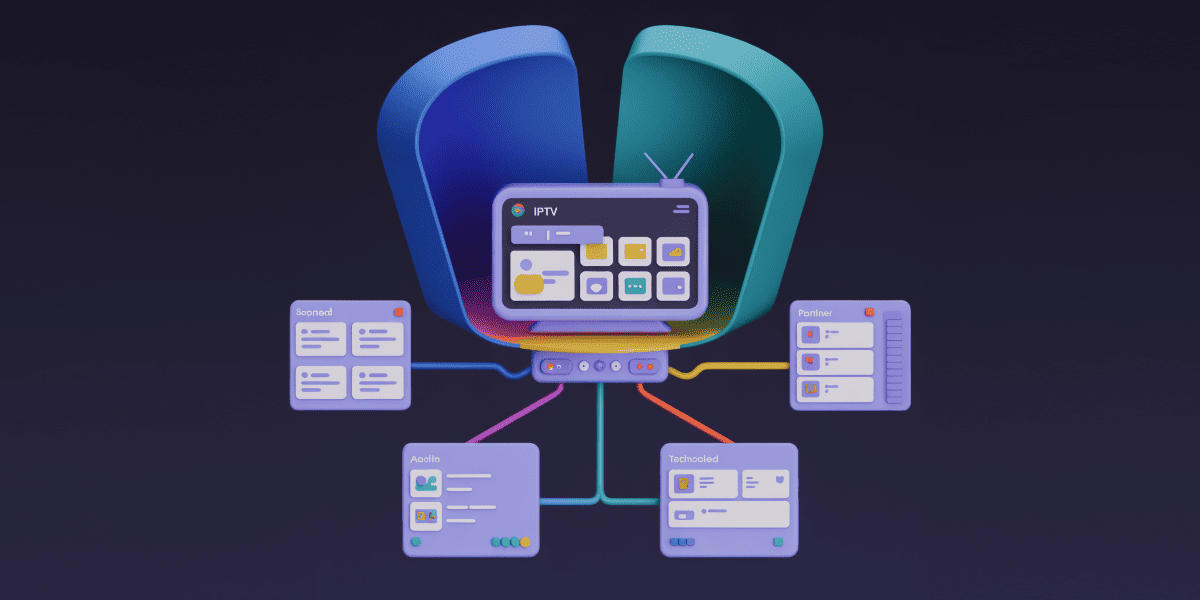
An IPTV project rarely remains a static system. While the service is still small, it may seem enough to configure the platform once, grant the team access, and then simply maintain its operation. But as the business grows, the operator gains new employees, contractors, regional offices, dealers, and service teams.
Along with these additions, the number of access points to critical functions also increases, including subscriber management, tariffs, devices, reporting, and service settings.
At this stage, access control stops being an internal IT task and becomes part of day-to-day business management. Role-based access control IPTV, or RBAC, helps build a clear access model in which each user works only within their own area of responsibility.
For IPTV and OTT operators, this matters from a security standpoint, but is also a way to maintain order in a rapidly growing operational structure.
When Universal Access Becomes a Problem
At an early stage, projects often follow a simple scenario where, to avoid slowing things down, employees are given maximum permissions. This makes it easier to launch new features, resolve incidents, and connect partners faster.
But over time, this approach begins to work against the company. The more people receive excessive privileges, the harder it becomes to understand who is responsible for what and maintain a secure IPTV platform. Any accidental mistake can affect an overly large part of the system.
For IPTV platforms, this is especially sensitive because a single interface often brings together very different processes. Some employees work with the subscriber base or with equipment, others with content, tariffs, or the partner network. If access is not separated by roles, the system becomes vulnerable both to security breaches and ordinary operational failures caused by excessive permissions.
What Changes When Access Is Built Around Roles
RBAC offers a more mature and manageable logic. With specific IPTV admin roles, a user is granted not just access to the system, but a specific set of permissions within the scope of their function. So a support specialist can see the information needed to resolve a request, but cannot interfere with global settings, a regional manager can work within their own area without affecting other divisions, and a partner can be given access only to the tools needed to connect and support their subscribers.
Taking this approach to IPTV access management reduces dependence on manual administration, because instead of configuring permissions separately for each employee every time, the operator builds a clear role model and scales it as the project grows.
The result is the creation of permission-based workflows which simplify onboarding for new teams, make the system more transparent, and significantly lower the risk of critical permissions being granted “just in case.”
Why This Is a Matter of Stability for Operators
In IPTV infrastructure, even a small incorrect action can have noticeable consequences. A tariff configuration error, an unauthorized change to device settings, or accidental access to sensitive subscriber data can quickly grow beyond a local issue. This leaves the operator facing a heavier support workload, an increase in service requests, delays in operations, and reputational losses.
The challenge is that in a real project there is usually no single uniform team. There's a head office, local branches, external integrators, partners, and outsourced service groups, all of which are involved in the platform’s operation, but their tasks differ.
RBAC makes it possible to build a unified management space without excessive centralization, where the IPTV user access levels exactly match the role of each participant. All of this while the operator retains control over the service architecture as a whole, including access logs and monitoring.
Where the Line Lies Between Convenience and Chaos
Practice shows that the transition to a role-based model with IPTV operator access control is needed at the point when different types of users and different levels of responsibility appear in the project, not when the system is already overloaded with incidents.
If access rights continue to be granted manually, this almost always leads to an accumulation of exceptions, temporary permissions, and poorly documented rights that eventually become permanent. This is exactly how convenience gradually turns into a source of chaos.
The most common mistake is copying one employee’s permissions to another simply because it's seen as being faster. Another typical issue is the absence of a basic role structure, when the operator does not separate at least the technical, commercial, and service layers.
In practice, the most effective models are those where several core roles are defined first: platform administrator, support team, technical operations, and subscriber or partner managers. Only after that are more specific scenarios added for branches, dealers, contractors, and the B2B segment.
RBAC as a Tool for Growth, Not Restriction
Sometimes centralized access policies and user control is perceived as a system of restrictions that complicates the team’s work. But for an operator, RBAC means just the opposite: effective IPTV permissions management helps the business grow faster without losing control.
When there is a need to connect a new branch, expand the partner network, or launch a new region, having a well-designed role model in place saves time and reduces the number of organizational mistakes.
This is especially important in projects where external participants are connected to the platform. A dealer, integrator, or contractor doesn't need full administrative access to perform their tasks effectively. On the contrary, a clearly limited area of responsibility makes the work faster and safer for everyone involved.
In this model, where a role hierarchy in IPTV systems is implemented, it becomes easier for the operator to scale the service, because every new role fits into an already clear structure instead of requiring manual setup from scratch.
Why a Mature Access Model Benefits the Business
When access rights are described correctly, it's not only the information security team that benefits. The operator gains more transparent processes, trains new employees faster, audits actions more easily, and resolves disputed situations with less effort.
It's also important that RBAC reduces the number of errors caused by human factors, with the system itself preventing users from stepping outside the boundaries of their working tasks.
As a result, access control becomes part of the business architecture of an IPTV project. It helps not only protect the platform, but also make it manageable at the level of daily operations, partner interaction, and for further scaling..
The earlier an operator builds such a model into the foundation of the service, the more smoothly the project grows and the easier it becomes to maintain service quality as the number of users, IPTV user roles, and business scenarios increases.
Control That Supports Growth
For secure operations for IPTV operators, RBAC is not a formal setting or extra layer of bureaucracy, but a way to align the access system with the real structure of the business, where different teams, contractors, and partners work simultaneously within one project.
When permissions are distributed by role, the platform becomes clearer, processes more resilient, and scaling more predictable.
This is whyRBAC in IPTV should be viewed as a foundation of mature service management. It helps reduce risks, streamline operations, and maintain control at the point when a project moves beyond a simple initial configuration.
For operators, integrators, and distributors, scalable access control systems are no longer just an optional feature, they are one of the signs of a systematic approach to developing IPTV infrastructure.
Recommended

How to Improve Viewer Retention with Smart Push Notifications
In today’s IPTV market, competition for viewer attention has become just as intense as the battle for content.

How to Properly Build a Staging Environment for Testing IPTV Updates
Any update in an IPTV ecosystem affects more than just one component. Changes in set-top box firmware, the client application, middleware, or content delivery logic can impact authentication, channel launch, EPG, VoD, DRM, and even network stability on the subscriber device side.

B2B niches for IPTV: from hotels to corporate TV
IPTV is increasingly going beyond the boundaries of the classic operator business and consumer TV. For the B2B segment – from hotels and business centers to medical facilities and corporate offices – IPTV is becoming a tool for service, communication, and attention management.