


Product request
You are looking for a solution:

Select an option, and we will develop the best offer
for you


Around The World: From the Component to the Customer

Interview with Svetlana Klepikova, Head of Infomir Procurement and Logistics Department.
We continue the theme of customer service with a story about how Infomir managed to build an
optimal logistics network that allows it to deliver products to customers around the world punctually.
Tell us about the department structure. How do you allocate responsibilities?
The department structure is divided into three branches:
Procurement. Employees of this department acquire all the necessary materials and components. Their work is closely connected to the planning and economic department, the design bureaus, production facility, and contractors.
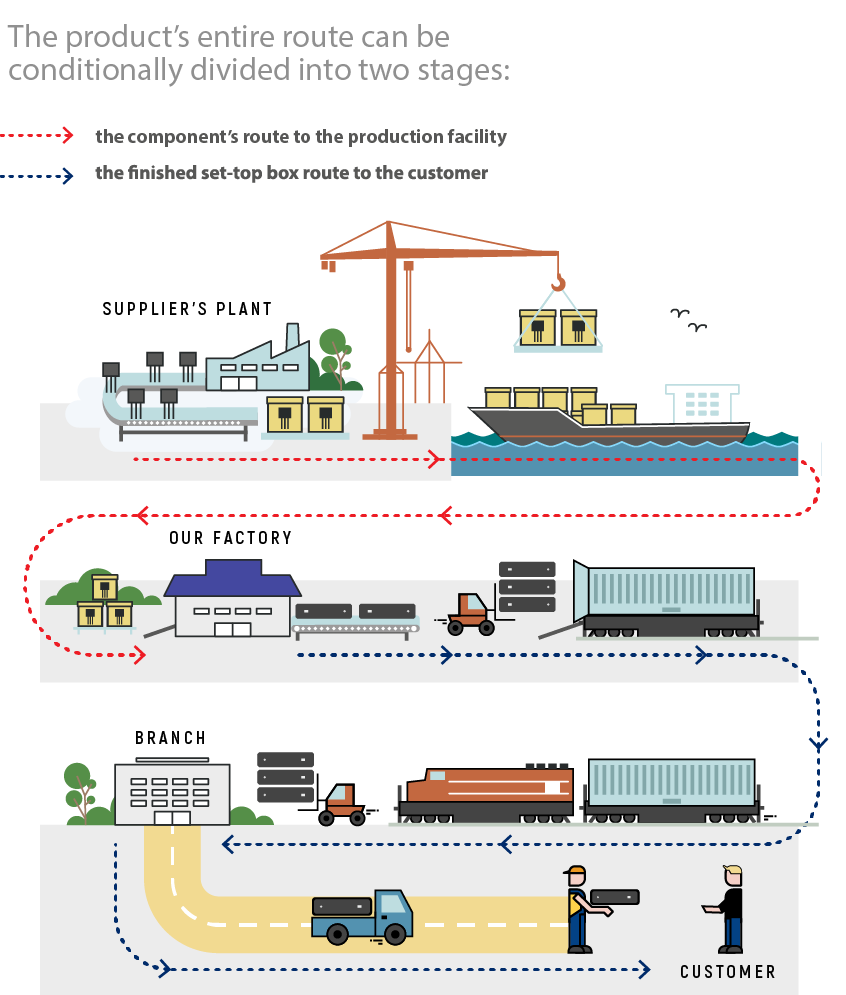
Logistics. The main task is the organisation of all the necessary transportation: from the supplier to production facilities, from production sites to branch warehouses, as well as intra-group transfers.
Customs brokers. They are engaged in import/export execution within Ukraine. This is because the company’s main production facility is located on the territory of Ukraine, and a whole group of specialists is required for punctual resolution of issues related to customs control.


How do you manage to fulfil deliveries all over the world?
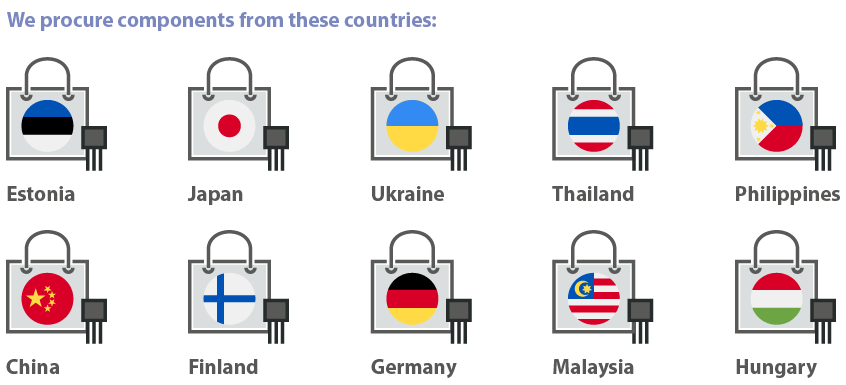
The company’s products are represented on the markets of more than 150 countries. The rapid delivery of set-top boxes to anywhere in the world requires consistent work at all stages. Nevertheless, the main burden of customer service is assumed by the branches and distributors.
Our task is to deliver the product to the region in good time and safely. We consolidate product batches to the representatives, after which they distribute set-top boxes in accordance with regional customer orders. The company also maintains reserve stocks in branch warehouses. This allows us to minimize the risks of late delivery or running out of set-top boxes.
What challenges do you encounter? How do you find the key to coping with them?
We live in an era of smart things. Every year, more and more products have the smart prefix added to their names. Manufacturers are narrowing the sector for old models while prioritising new trends. As a result, demand in the memory market exceeds supply, so shortages appear.
It’s especially true for manufacturers of memory and smart chips. The resources required for plate production are limited. The chip manufacturers and distributors are not ready for this kind of demand. The market is limited in terms, quality, and price. This leads to the emergence of stiff competition for sourcing components amongst the companies that manufacture target devices.
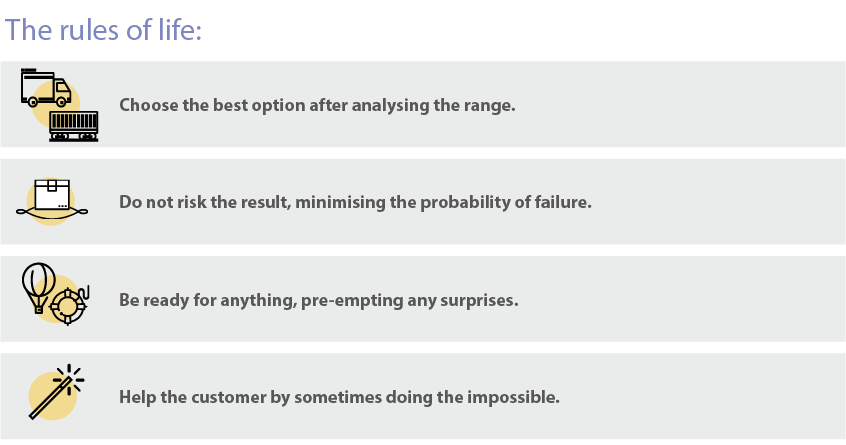
In this situation, even the most ideal planning which includes entering into long-term contracts does not completely solve the problem. Over the past year, we have encountered many similar challenges. Flexibility in management has made it possible to solve all the problems in the best way.

Business processes in the company are being constantly optimised. Along with the experience gained, the mutual assistance, and the stability of the team, this allows us to constantly improve the department’s results.
Share the non-obvious factor that may prove crucial to the success of a global company Companies are not born big.
Stable business development can be compared to the growth of a tree: not too fast, but with fundamental changes taking place inside and out. The widespread problem of global companies is the complexity of communication. This happens during the growth process, when management can’t establish quickly enough an effective relationship between its individual structural divisions. As a result, some tasks are taking much longer to be solved. Alternatively, well-established communication saves both employee and customer time. For example, the close cooperation of our department specialists with the design office allows us to solve quickly those complex problems that require deep understanding of the process’s technical side.
Recommended
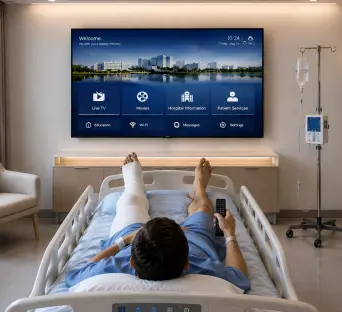
IPTV and the Modernization of Hospital Digital Infrastructure
Because hospitals operate around the clock, it's essential that their digital infrastructure supports stable departmental operations, data security, internal communications, and patient comfort. As a result, a hospital’s digital infrastructure requires a stricter approach than the infrastructure of a hotel, office, or residential complex.
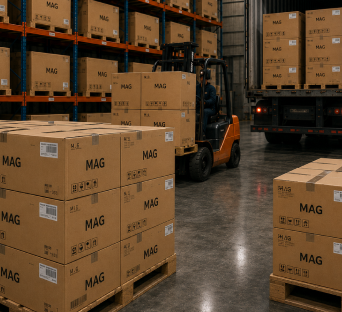
Bulk Purchase of IPTV Hardware
A bulk purchase of IPTV hardware is not just a way to reduce the unit price through higher volume. For many operators, integrators, distributors, and those involved with hospitality projects, this method of procurement becomes an essential part of a successful operating model.

7 Typical IPTV/OTT Problems and How Ministra PRO Helps Solve Them
Launching an IPTV/OTT service has long been about more than simply delivering video streams to subscribers. Operators also need to manage content, applications, devices, tariffs, user access, playback quality, infrastructure costs, and support processes at the same time.