


Product request
You are looking for a solution:

Select an option, and we will develop the best offer
for you


10 Trends in IPTV and OTT That Will Shape the Market Through 2030

Both the IPTV and OTT markets are changing rapidly, with viewers expecting convenient access to live television, video on demand services, Smart TV apps, personalized recommendations, and stable playback quality across all devices.
For IPTV and OTT operators, this means moving from simply delivering TV channels to becoming full-fledged video streaming platforms.
According to Grand View Research, the global streaming video market could grow from $129.26 billion in 2024 to $416.8 billion by 2030. Estimates by Research and Markets suggest that the OTT market may reach $510.5 billion by 2030, while also giving a positive IPTV market growth forecast due to demand for managed TV services, hybrid models, and cloud platforms.
Below, we have outlined the key IPTV and OTT industry trends operators should take into account to provide a competitive service to their subscribers.
1. Hybrid IPTV + OTT Will Become the Default Model
Traditional IPTV gives the operator control over quality and the network, while OTT provides flexibility, multi-screen access, and the rapid launch of new services. By 2030, the most resilient platforms will be hybrid ones, where linear TV, VOD, catch-up, cloud DVR, FAST channels, and premium content are available in a single interface.
What to do. Operators should consider developing hybrid OTT business models that combine basic TV packages, thematic subscriptions, ad-supported FAST channels, VOD content, and partner streaming services. This approach makes it possible to diversify revenue sources and adapt flexibly to different consumption scenarios.
2. Smart TV and Connected TV Will Become the Main Screen
The big screen is once again becoming the center of video consumption, but now through apps for Smart TV, Android TV, Apple TV, Roku, operator set-top boxes, and other connected TV devices. In the United States, streaming has already surpassed broadcast and cable TV combined in terms of share of TV viewing, which demonstrates a broader shift in user habits.
What to do. The priority is to develop high-quality applications for Smart TV and connected TV devices. Particular attention should be paid to launch speed, convenient navigation and EPG, voice search, personalized recommendations, and stable performance on popular platforms and device models.
3. FAST Channels and Ad-Supported Video Will Become a New Revenue Source
FAST TV channels — free linear channels with advertising — are quickly becoming an important part of the OTT streaming video market. For IPTV operators, FAST channels in OTT platforms are a convenient way to monetize archives, local content, and niche libraries without increasing the subscription price.
What to do. Launching FAST channels aimed at different audiences and content types is considered a promising direction, including local news, sports, children’s programming, films, and niche thematic selections. This makes it possible to use existing content libraries more effectively and expand advertising monetization at no extra cost through ad-supported subscriptions.
4. AI Will Transform Recommendations, Search, and Retention
AI in video streaming platforms is already being used for personalized video recommendations, search, auto-tagging, subtitles, churn prediction, dynamic advertising, and quality control. The more accurately a platform understands the viewer, the higher the engagement and the lower the user churn.
What to do. To apply AI solutions effectively, operators need to build an integrated system for data collection and analysis. This may include data on viewing behavior, search queries, devices used, playback quality, payments, and user responses to recommendations, which together increase the accuracy of algorithms and their impact on audience retention.
5. Cloud IPTV Platforms Will Accelerate Service Development
Cloud-based IPTV platforms make it possible to launch new features faster: VOD, catch-up TV, cloud DVR, DRM, transcoding, SSAI advertising, and analytics. For many operators, the optimal approach will be a hybrid infrastructure: critical live services and edge CDN closer to the network, while analytics, storage, recommendations, and part of the processing are handled in the cloud.
What to do. Evaluating cloud solutions usually goes beyond a direct cost comparison and includes parameters such as speed of bringing new products to market, scaling flexibility, and reduced operational complexity. Hybrid infrastructure models are often viewed as a compromise between control and flexibility.
6. CDN, Edge, and Low-Latency Streaming Will Become a Retention Factor
Buffering, long loading times, and delays are especially critical for live television, sports, and news. Therefore, content delivery networks, edge caching, multicast ABR, and low-latency live tv streaming will become an essential part of a competitive IPTV/OTT platform.
What to do. Systematic monitoring of user experience (QoE) is becoming increasingly important, including metrics such as playback start time, buffering frequency, bitrate changes, delays, and errors. Analyzing these indicators by region and device helps identify bottlenecks and improve service quality.
7. 5G Connectivity Will Expand Video Consumption Scenarios
5G impact on video streaming is not only about speed, but also about low latency, increased network capacity, and the development of fixed wireless access (FWA). This opens up opportunities for mobile TV, backup delivery of live events, temporary channels, and connecting users in areas where fixed networks are limited.
What to do. Adapting video platforms to mobile consumption scenarios with low-latency streaming is becoming an important area of development. This includes optimizing adaptive bitrate streaming (ABR), using modern codecs, placing CDN closer to the user, and developing partnership offers with mobile operators, including bundled packages.
8. Monetization Will Become Multi-Layered
A single subscription no longer covers all scenarios. By 2030, hybrid models will continue to develop: SVOD, AVOD, FAST, TVOD, pay-per-view, thematic packages, ad-supported plans, and bundled offers with internet or mobile services.
What to do. Monetization development usually happens in stages — from basic audience segmentation and the use of in-house advertising capabilities to more complex tools such as server-side ad insertion (SSAI), programmatic models, and personalized offers based on user data.
9. Live Television and VOD Will Merge Into a Single Interface
Viewers do not care where the content is technically located — on air, in the archive, or in a video-on-demand catalog. What they want is to quickly find something interesting and continue watching on any device. Therefore, the future of streaming video platforms lies in a single interface for live television, catch-up, video on demand, FAST channels, and recommendations.
What to do. The focus is shifting toward building interfaces centered on user scenarios. This means creating navigation based on the context of consumption, including categories such as “on air now,” “continue watching,” “sports today,” “for children,” “free with ads,” and personalized recommendations.
10. Security and Rights Protection Will Become Critical
The growth of OTT/IPTV increases the risks of piracy, account sharing, app hacking, data leaks, and advertising fraud. To work with premium content, operators need DRM, forensic watermarking, API protection, tokenized playback URLs, and device and session control.
What to do. Security is increasingly viewed as an integral part of the product, not as an auxiliary function. The use of security tools such as those listed above helps to strengthen trust among rights holders, advertisers, and end users.
2030, IPTV operators need to evolve toward hybrid, cloud-based, and personalized video platforms. The leaders will be those who combine the reliability of IPTV with the flexibility of OTT: Smart TV apps, connected TV devices, FAST TV channels, AI recommendations, cloud infrastructure, low-latency streaming, and flexible monetization models.
The main question regarding the future of streaming platforms is no longer whether an operator needs OTT, but how quickly it can become a platform that viewers return to every day.
Recommended
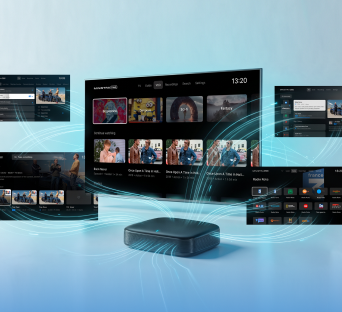
All Content in One Service: Live TV, VoD, Radio, Archive, TimeShift, and EPG in Ministra PRO
A television service has long been more than just a list of channels. Viewers now want to watch live broadcasts, return to a missed program, pause a show, schedule recordings of individual episodes or an entire series using nPVR, or choose a movie from a catalog. At the same time, all these capabilities should feel like parts of a single media environment rather than separate systems.
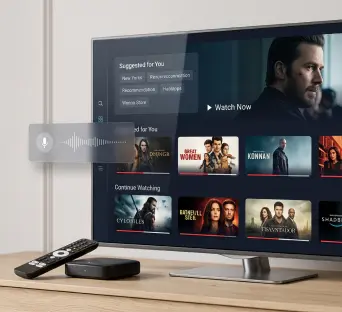
Interactive TV Trends on Google TV: What to Know in 2027
When choosing a television platform for 2027, businesses need to assess more than picture quality and the app selection. Equally important considerations are how viewers will find content, what capabilities the operator will have, and how predictably the equipment will perform after updates.
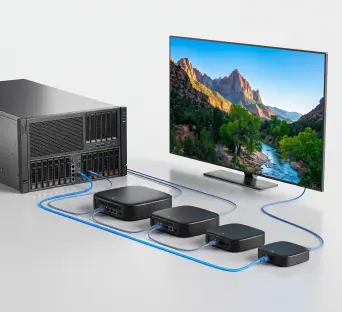
How to Reduce Video Delivery Costs Without Compromising Quality: CDN, Edge Cache, and Multi-CDN
As an IPTV/OTT service’s audience grows, so do both revenue and video delivery costs. For an operator, this means additional terabytes of outbound traffic. For a hotel, it means greater pressure on its internet connection. And in the case of maritime transport, it means the video service has to compete with other applications for limited bandwidth.