


Product request
You are looking for a solution:

Select an option, and we will develop the best offer
for you


How to Distribute IPTV Products in the UK

The United Kingdom remains one of the most regulated and, at the same time, commercially attractive markets for the distribution of IPTV equipment. However, entering this market requires a well-established understanding in advance of regulatory requirements, the tax structure, and the post-Brexit logistics model.
For those looking to distribute IPTV in the UK, unlike less formalized markets, simply ensuring product availability is not sufficient – it's essential to guarantee the product’s full legal and technical compliance with the country’s requirements.
According to Statista, the consumer electronics market in the United Kingdom in 2025 was worth tens of billions of dollars, with a significant share of its growth linked to devices for digital content playback and video streaming. This indicates strong demand, but also increased requirements for compliance and the quality of market entry.
Regulatory and Certification Requirements in the UK
The first and key barrier for any IPTV equipment, including IPTV UK hardware compliance, is mandatory UKCA certification (UK Conformity Assessed). This marking confirms that the product complies with British requirements for safety, electromagnetic compatibility, and environmental standards.
After the United Kingdom’s withdrawal from the EU, the system of UKCA certification for IPTV gradually replaced CE marking, although in certain cases CE may still be accepted temporarily, especially if the supply chain is aimed at both the EU and the UK. Strategically, however, the market is moving toward full autonomy of British certification.
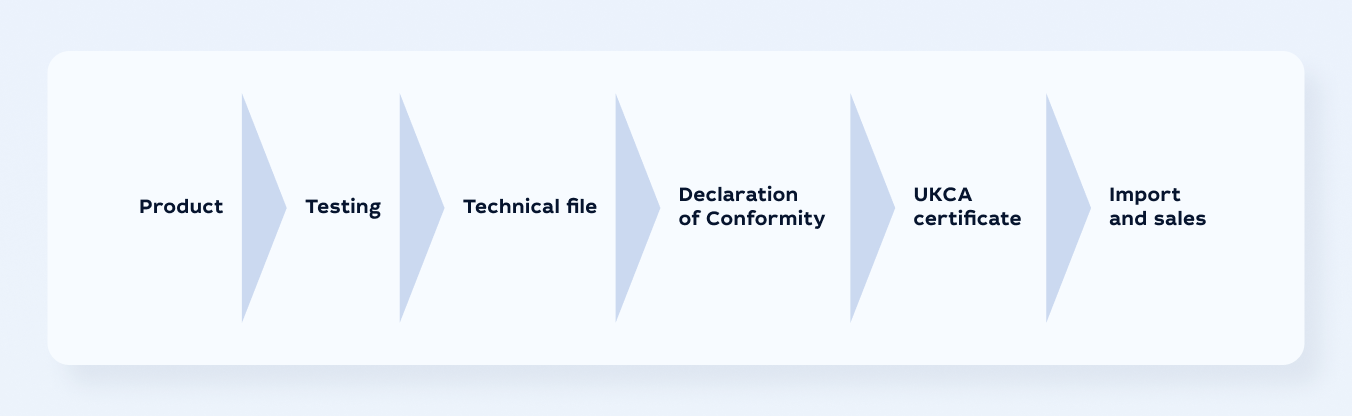
For IPTV devices UK regulations, three areas of requirements are critical: electromagnetic compatibility – EMC, electrical safety standards – the Low Voltage Directive, and restrictions on the use of hazardous substances – RoHS. EMC compliance and all other parameters are verified through laboratory testing, after which a technical file and a declaration of conformity are prepared.
According to the UK Government, responsibility for the accuracy of documentation and marking in most cases lies with the importer or distributor if the manufacturer is located outside the United Kingdom. This is a key point: even when a ready-made certified product is available, legal responsibility within the UK remains with the local participant in the supply chain.
Import and Customs Considerations
The import of IPTV equipment into the United Kingdom after Brexit has become a significantly more formalized process. Every company involved in the supply chain is required to have an EORI number, which is used for customs declarations, as well as VAT registration to ensure proper taxation.
The standard VAT rate in the country is 20%, and it directly affects the final product price, margins, and competitiveness. According to HM Revenue and Customs, the correct application of IPTV VAT UK is a mandatory condition for lawful commercial activity and is regularly checked as part of controls to ensure compliance with UK import duties.
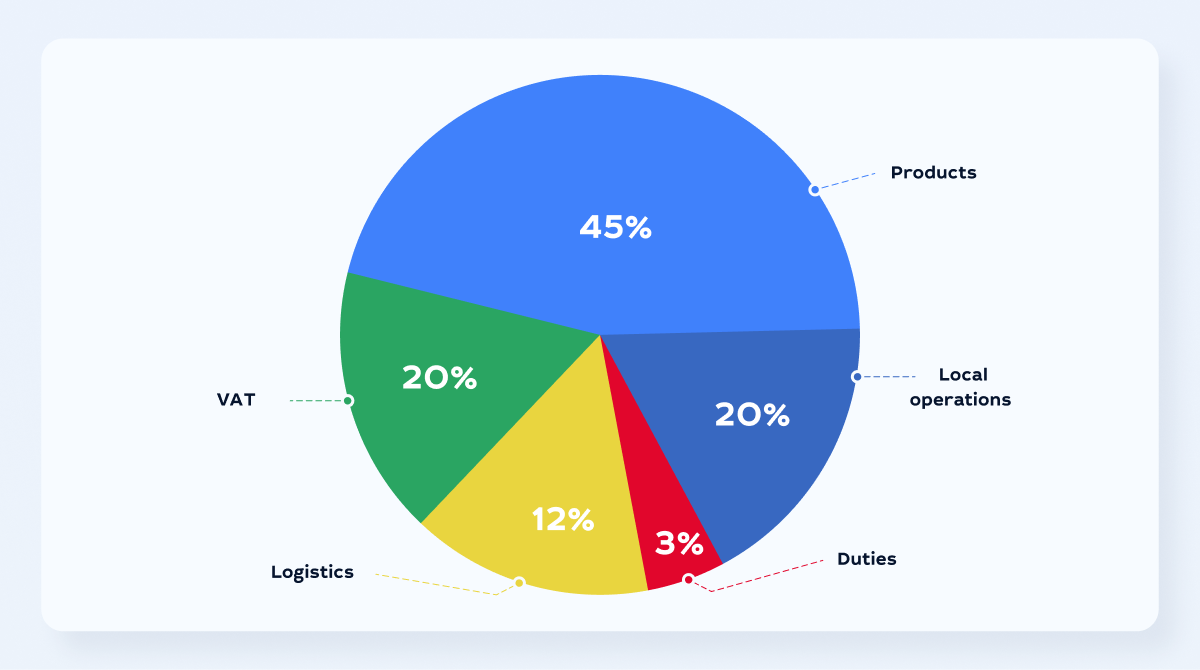
Cost structure for importing IPTV devices into the United Kingdom
From a practical standpoint, companies choose between two basic models. The first is direct import, where the IPTV distributor UK fully controls logistics, customs clearance, and taxes. The second is working through a local partner who assumes part of the operational and regulatory obligations.
The first model provides greater control over margins but requires a high level of process maturity. The second lowers the barrier to entry but reduces profit and increases dependence on the partner network.
Telecom and Market Regulations
The telecommunications market in the United Kingdom is regulated by Ofcom. However, it's important to understand a key distinction, which is that the sale of IPTV equipment and the provision of IPTV services are regulated differently.
Equipment is treated as a consumer electronics product and falls under safety and consumer protection standards. At the same time, IPTV services related to content, licensing, and media delivery may be subject to additional OFCOM regulations and oversight.
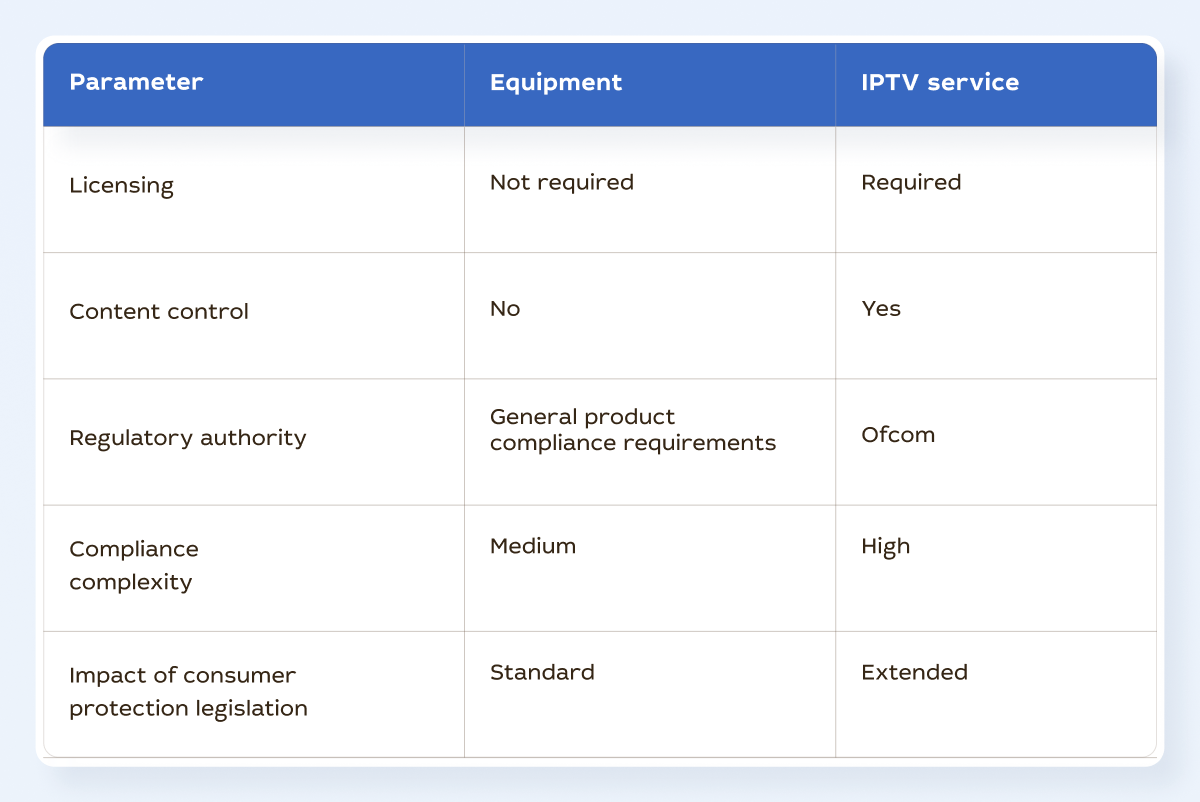
Regulation of IPTV equipment and services in the United Kingdom
From the perspective of consumer law, the United Kingdom remains one of the strictest jurisdictions in Europe. According to the UK Government, in distance selling, customers have the right to return goods within 14 days without giving any reason. This creates high expectations for return processes, logistics, and the quality of customer support.
Distribution Models in the UK
The choice of distribution model in the United Kingdom affects not only the cost structure but also the long-term resilience of the business. The market is characterized by a high share of online sales: according to Statista, more than one third of all electronics products are sold through digital channels, increasing the importance of logistics and delivery speed.
In practice, companies use several approaches. Direct import makes it possible to retain control over the product and pricing policy, but it requires a mature operational structure. Working through a local distributor reduces the complexity of market entry, but lowers margins and increases dependence on the partner.
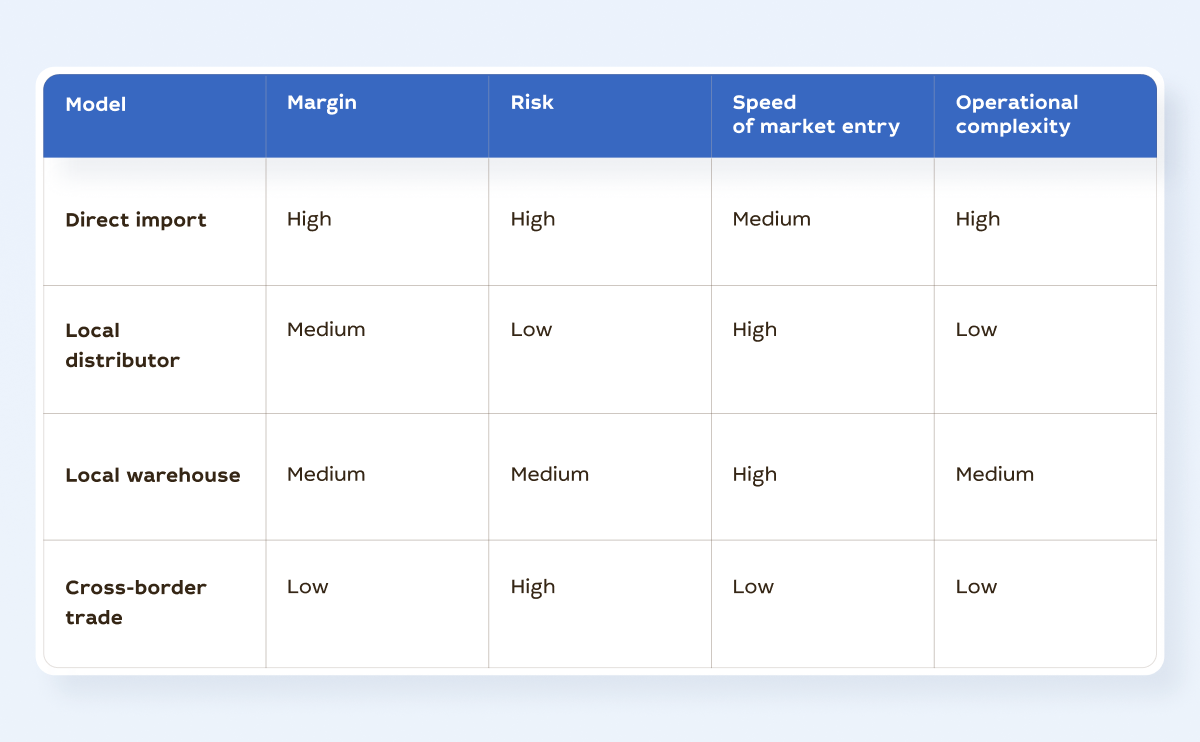
Comparison of distribution models
The local warehouse model deserves separate attention, as it is effectively becoming the standard for successful market players: storing goods within the UK makes it possible to ensure delivery within 24–48 hours, which meets end customers’ expectations. Cross-border trade, by contrast, is more often used as a temporary or test solution, as it causes delays and complicates returns.
Warranty, Support and After-Sales Obligations
The service model in the United Kingdom is a critical element of competitiveness. Customers expect not only high-quality devices but also predictable support throughout the entire product lifecycle.
To give an indication of after-sales support expectations, Ofcom research shows that more than 70% of users expect technical issues to be resolved within 48 hours, creating the need for local or well-organized remote support.
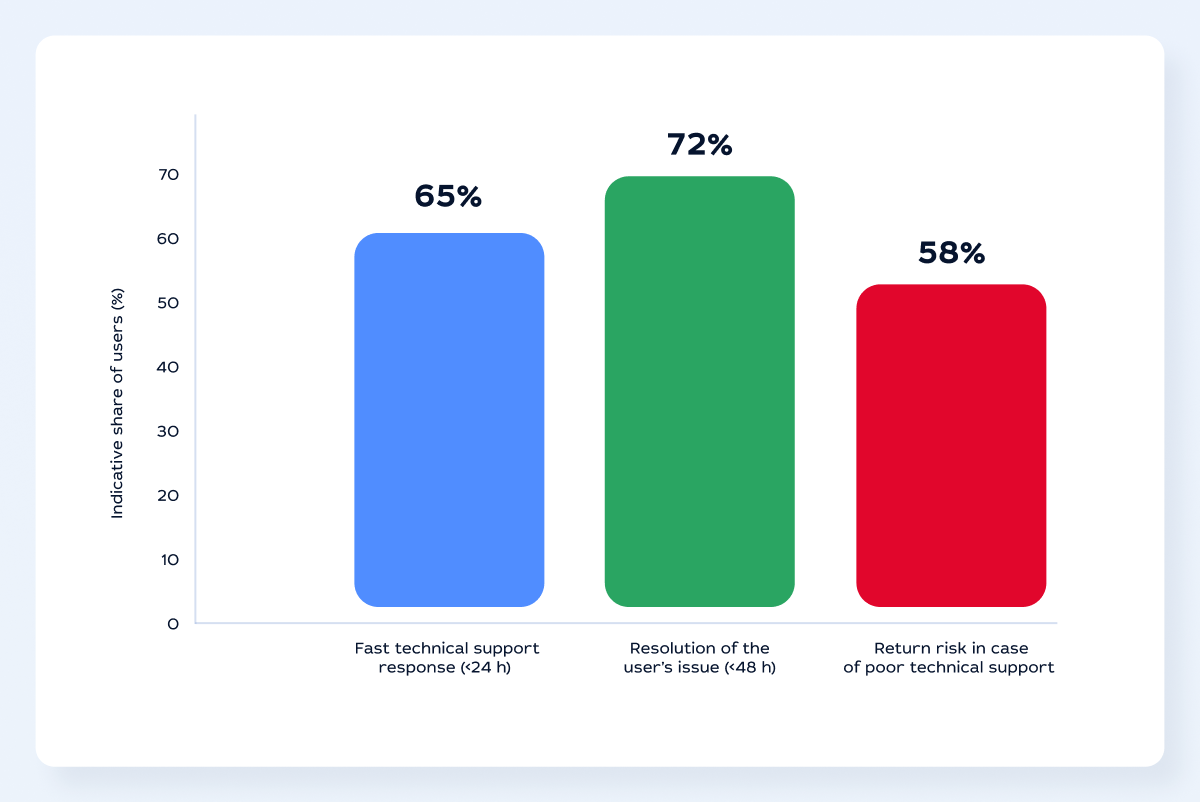
Customer expectations regarding service quality in the United Kingdom
A typical structure includes a one-year warranty, formalized RMA processes, regular firmware updates, and SLA commitments regarding response times. The absence of these elements leads to an increase in returns and reduced trust in the brand, especially in the IPTV device segment, where operational stability is extremely important.
IPTV Import UK: Market Entry Checklist
Before entering the market, companies usually go through several key stages of preparation. First of all, they confirm the availability of UKCA marking and proper technical documentation. Next, the tax structure is developed with VAT taken into account, since the 20% rate directly affects the pricing model.
At the same time, an EORI number is obtained, without which it's impossible to legally carry out imports. After that, the warranty and support model is defined, as it influences brand perception within the B2B chain.
Special attention is also paid to logistics, contracts and their distribution agreement terms, as well as the product storage model. In practice, insufficient development of these elements is most often the cause of operational problems at the early stage.
Common Challenges
Despite the market’s attractiveness, companies regularly face recurring challenges. One of the most common issues is an error in certification or incomplete technical documentation, leading to delays in the customs clearance process or making it impossible to bring the product to market.
The use of unofficial supplies – the grey market – is also common, creating legal and reputational risks. The financial model is also often underestimated, with VAT, logistics, and returns having a significant impact on margins.
Service workload becomes a separate issue. Many companies are unprepared for the number of support requests, especially in the first months after the product launch. According to Statista, a significant share of delays and operational problems in e-commerce is linked specifically to errors in documentation and logistics.
When the UK Market May Not Be Suitable
Despite the market’s high potential, it's not suitable for every company. If a business lacks an understanding of compliance requirements or does not have an internal support structure, market entry may lead to high operating costs without the expected return.
Business scale should also be taken into account. With small volumes, fixed costs for certification, logistics, and support may not pay off. In such cases, a more rational strategy is to work through local partners or postpone market entry until a certain level of maturity has been reached.
According to UK Government estimates, the complexity of the regulatory environment and the cost of operational entry are key barriers for small and medium-sized companies launching sales in the United Kingdom.
The UK market remains one of the most stable and solvent in Europe, but it requires a systematic approach and adherence to the post-Brexit import rules. Companies that take regulatory requirements, the tax structure, and the service model into account in advance achieve a much more predictable and scalable result than those that view the market solely from the perspective of demand.
FAQ
1. Is UKCA mandatory for IPTV devices?
Not always. For many types of electronics placed on the UK market, CE marking may still be accepted, but the applicable requirements depend on the device category, target market, and specific regulations.
UKCA remains the UK’s conformity assessment marking, so before supplying IPTV products, it is important to check which requirements apply to a specific IPTV set-top box model, power supply, Wi-Fi/Bluetooth module, and related accessories.
Rules for Northern Ireland may differ: UKCA alone does not replace the requirements for products placed on the Northern Ireland market. If you plan to sell across the whole UK, check compliance separately for Great Britain and Northern Ireland.
2. Can I distribute IPTV products without a UK entity?
Yes, in many cases this is possible. A UK legal entity is not always required to sell or supply IPTV devices in the UK. However, the business still needs to define who acts as the importer, who handles customs clearance, taxes, product compliance, and communication with local partners.
In practice, companies often work through a local distributor, reseller, fulfilment partner, or importer. This can simplify customs procedures, warranty service, returns, and communication with end customers.
3. What VAT obligations apply?
VAT obligations depend on the sales model: B2B or B2C, direct supply or marketplace sales, where the goods are located at the time of sale, shipment value, and whether the company stores goods in the UK.
If the goods are imported into the UK, import VAT may apply, along with the need to complete customs documents correctly. In a B2B model, some obligations may be assigned to the UK importer or buyer, but this should be clearly stated in the contract and delivery terms.
4. Is local warehousing required?
No, a local warehouse is not required by default. IPTV products can be supplied directly from another country, through a distributor, fulfilment operator, or marketplace.
However, warehousing in the UK may be useful if the company wants to reduce delivery times, simplify returns, provide warranty replacements, and improve service levels for B2B or B2C customers. Storing goods in the UK may also affect VAT, import obligations, and the local operating model.
5. How does Brexit affect IPTV imports?
After Brexit, supplies between the EU and the UK are no longer treated as intra-EU movement of goods. Imports into the UK require standard customs procedures: product classification, customs declaration, EORI number, calculation of duties and import VAT, and verification of applicable product compliance requirements.
Brexit also separated product compliance regimes: Great Britain may follow UKCA/CE rules depending on the product category, while Northern Ireland may have separate requirements. Companies planning to sell IPTV devices across the UK should check both customs and regulatory requirements for their specific supply channel.
Recommended
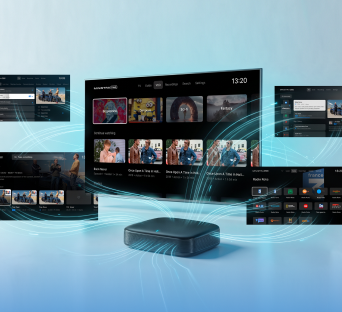
All Content in One Service: Live TV, VoD, Radio, Archive, TimeShift, and EPG in Ministra PRO
A television service has long been more than just a list of channels. Viewers now want to watch live broadcasts, return to a missed program, pause a show, schedule recordings of individual episodes or an entire series using nPVR, or choose a movie from a catalog. At the same time, all these capabilities should feel like parts of a single media environment rather than separate systems.
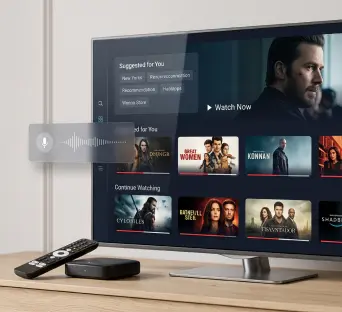
Interactive TV Trends on Google TV: What to Know in 2027
When choosing a television platform for 2027, businesses need to assess more than picture quality and the app selection. Equally important considerations are how viewers will find content, what capabilities the operator will have, and how predictably the equipment will perform after updates.
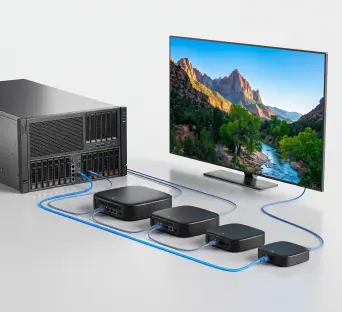
How to Reduce Video Delivery Costs Without Compromising Quality: CDN, Edge Cache, and Multi-CDN
As an IPTV/OTT service’s audience grows, so do both revenue and video delivery costs. For an operator, this means additional terabytes of outbound traffic. For a hotel, it means greater pressure on its internet connection. And in the case of maritime transport, it means the video service has to compete with other applications for limited bandwidth.