


Product request
You are looking for a solution:

Select an option, and we will develop the best offer
for you


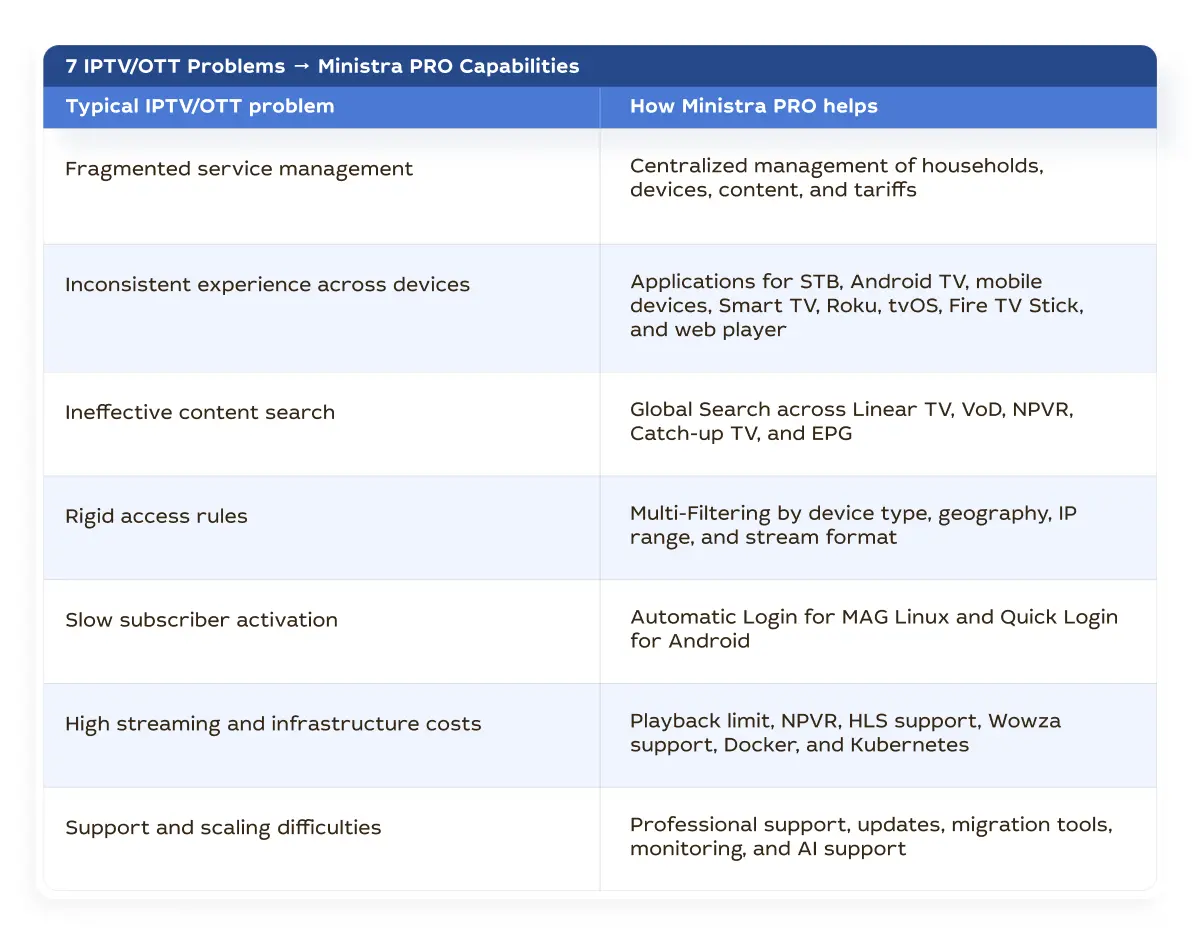
7 Typical IPTV/OTT Problems and How Ministra PRO Helps Solve Them
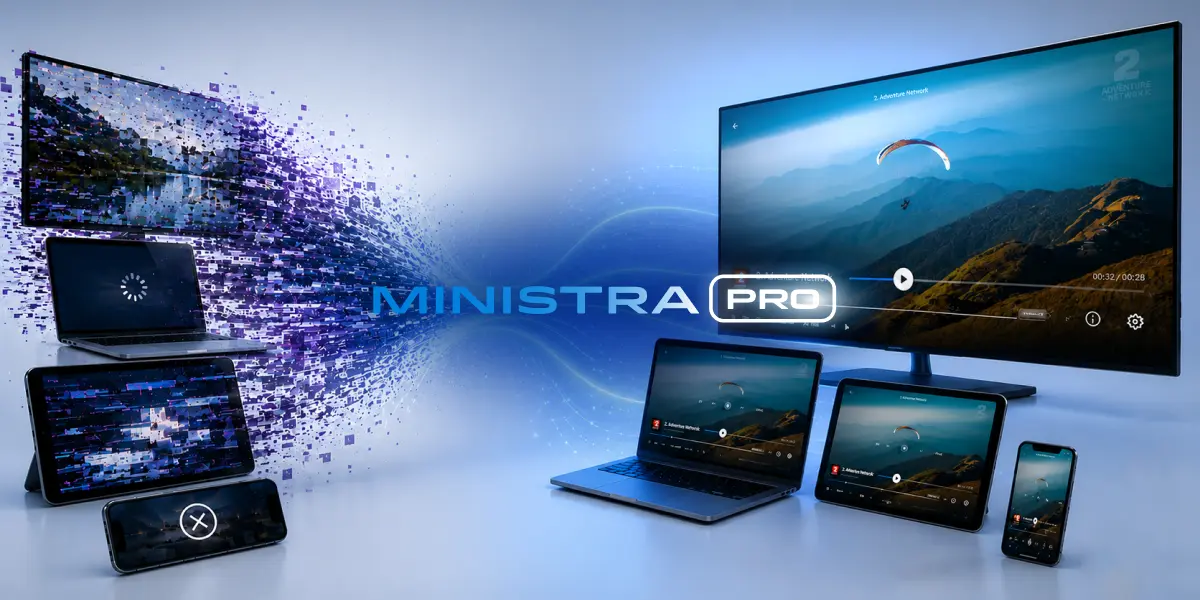
Launching an IPTV/OTT service has long been about more than simply delivering video streams to subscribers. Operators also need to manage content, applications, devices, tariffs, user access, playback quality, infrastructure costs, and support processes at the same time.
As a result, some IPTV problems and solutions should be viewed not as a set of isolated technical incidents, but as part of the overall operating model of the service.
As the market grows, this operational complexity is becoming one of the key challenges for telecom providers, regional IPTV operators, hospitality projects, broadcasters, and niche content services. OTT streaming issues, unstable application performance, device activation errors, content delivery issues, and poor video streaming quality directly affect user experience and support costs.
The IPTV market continues to grow: Mordor Intelligence estimates the video streaming market at USD 212.83 billion in 2026 and forecasts growth to USD 356.20 billion by 2031. At the same time, Ericsson reports that video accounted for 76% of all mobile data traffic by the end of 2025, confirming the central role of video delivery in digital infrastructure.
For IPTV/OTT operators, this means one thing, which is that the platform the service runs on must be more than just a content delivery layer. It needs to support daily operations, subscriber-base growth, device diversity, monetization, technical support, service uptime, and long-term development.
In this article, we look at how the cross-platform IPTV/OTT solution – the Ministra PRO platform – helps operators manage data, content, infrastructure, tariff packages, and user interface customization in a professional operating environment.
1. Service Management Becomes Too Fragmented
One of the most common IPTV/OTT problems is operational fragmentation. Channels may be managed in one system, VoD in another, devices in a separate database, tariffs in billing software, and support requests in a separate workflow. At an early stage of service development, this structure may work, but as the subscriber base grows, it becomes inefficient.
Fragmentation often makes IPTV service problems harder to diagnose. Teams spend more time switching between tools, the likelihood of configuration errors increases, and launching a new tariff, application, or content package takes longer than expected. For small and medium-sized operators, this can slow down business development. For larger projects, it can directly affect service quality and support costs.
Ministra PRO helps address this challenge through an administrative layer for managing households, devices, content, and tariffs.
Tariffs can be created inside Ministra PRO, but for operator projects, the main scenario more often involves managing both tariffs and accounts through external billing. For this type of integration, Ministra PRO provides a Billing API that helps connect the middleware with the billing system and preserve a unified logic for service management.
As IPTV middleware, the platform helps connect the key elements of an IPTV/OTT service into a single manageable environment, rather than supporting them as a set of disconnected operational processes.
While this does not eliminate the need for billing, CDN, encoding, or customer support tools, Ministra PRO gives operators a structured middleware layer that helps make daily management more predictable and reduces typical IPTV middleware problems related to fragmented data, devices, and tariff settings.
2. Users Expect the Same Experience on Every Device
Modern subscribers don't tend to think in terms of delivery platforms. Instead, they expect the service to work equally well on a TV set-top box, Smart TV, smartphone, tablet, and browser. For the operator, this creates a complex product challenge: every additional platform brings separate application requirements, interface limitations, testing cycles, and support scenarios.
A fragmented user experience quickly becomes a customer support problem. If features differ from platform to platform or the interface feels inconsistent, users are more likely to contact support, use certain features less often, or switch to competitors. As a result, technical inconsistency may be perceived as IPTV performance issues, even when the stream delivery itself works correctly.
Ministra PRO supports user applications on popular mobile and TV platforms, including Infomir set-top boxes, Android TV, Android smartphones and tablets, iOS devices, LG webOS TVs, Samsung Tizen, Roku set-top boxes, tvOS, Fire TV Stick, and a web player in the browser. The platform also emphasizes a familiar classic UI across platforms, helping operators maintain a consistent user experience.
For operators, this is not only a UX advantage. Cross-platform availability helps reduce product fragmentation, simplify service positioning, and provide more flexibility when working with different subscriber groups, regions, and device ecosystems.
3. Users Struggle to Find Content
As an IPTV/OTT service grows, search and content discovery become serious challenges. A simple channel list is no longer enough. A user may need to find a linear TV channel, a movie in VoD, a program in Catch-up TV, an NPVR recording, or information in the EPG. If search is slow or incomplete, valuable content effectively becomes invisible.
This problem affects audience retention. A user who cannot quickly find a program, movie, or recording may assume that the service does not have that content. In practice, the problem may not be the absence of content, but an insufficiently effective search and navigation mechanism. For the operator, it's a content delivery issue: the content exists in the system, but the user cannot quickly get to it.
Ministra PRO introduced the Global Search* feature, which helps users find the right IPTV/OTT service elements across linear television, video on demand, NPVR, Catch-up TV, and EPG. This feature is available on different platforms, including Android TV, Android Mobile, Fire TV, Apple TV, iOS, Tizen, webOS, and Roku.
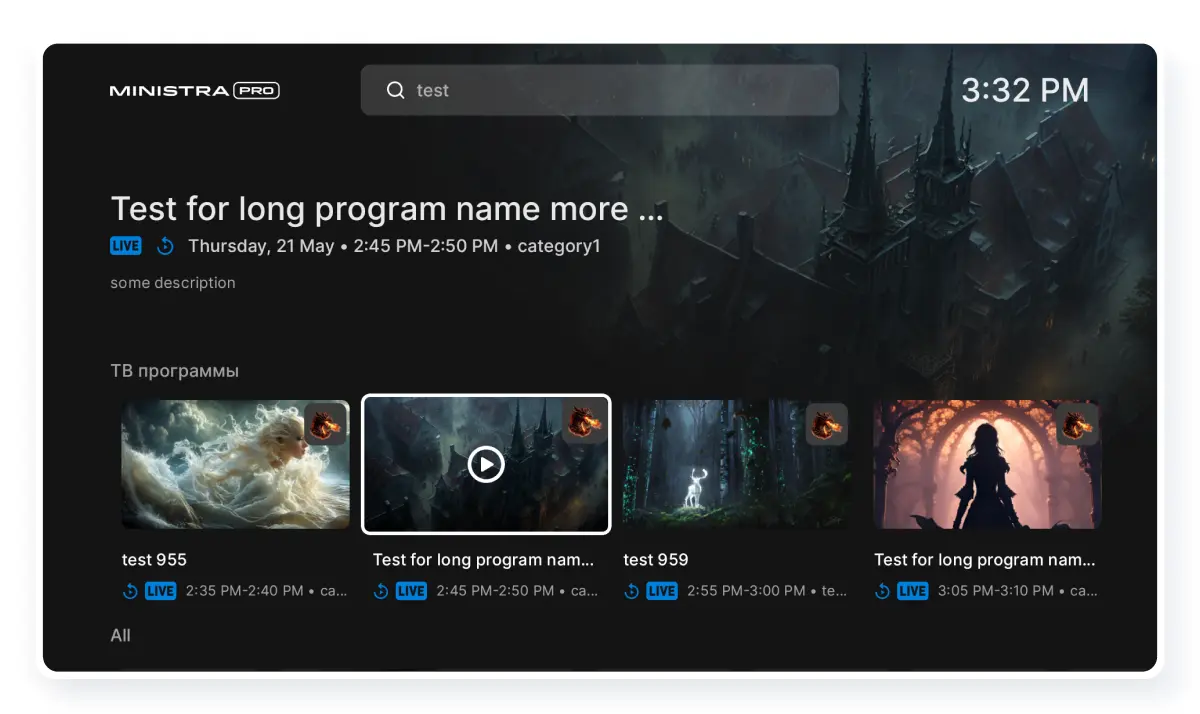
For the operator, search is not just a convenience feature. The faster a user finds the right channel, movie, program, or recording, the more likely they are to continue watching content inside the service instead of looking for it on another platform. Good search makes the library clearer, increases the perceived value of the subscription, and shortens the path from opening the app to watching.
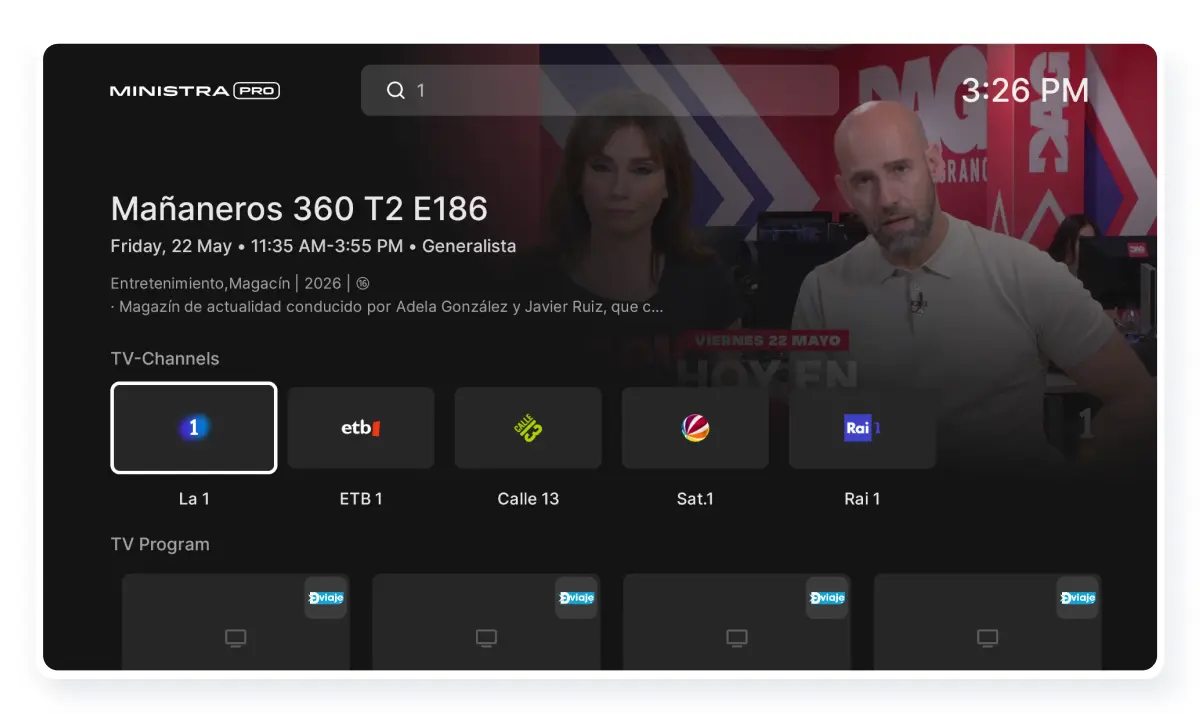
*Search for any content in one place
4. Access Rules Are Too Rigid for Real IPTV/OTT Operations
IPTV/OTT operators often need a more flexible access logic than a simple “allowed” or “not allowed” model. The same service may include different content packages, device types, geographic markets, IP ranges, network environments, and stream formats.
For example, one content package may be available only in a specific region. Another may require different stream formats for Smart TVs and TV set-top boxes. A hospitality project may need different rules for guest rooms, staff areas, and public screens. Without flexible filtering, operators have to rely on manual workarounds or duplicate settings.
The Multi-Filtering feature in Ministra PRO allows multiple filters to be applied at the same time. Operators can set different rules for different device types, restrict access to content based on geographic parameters or IP ranges, and use different stream formats for different devices.
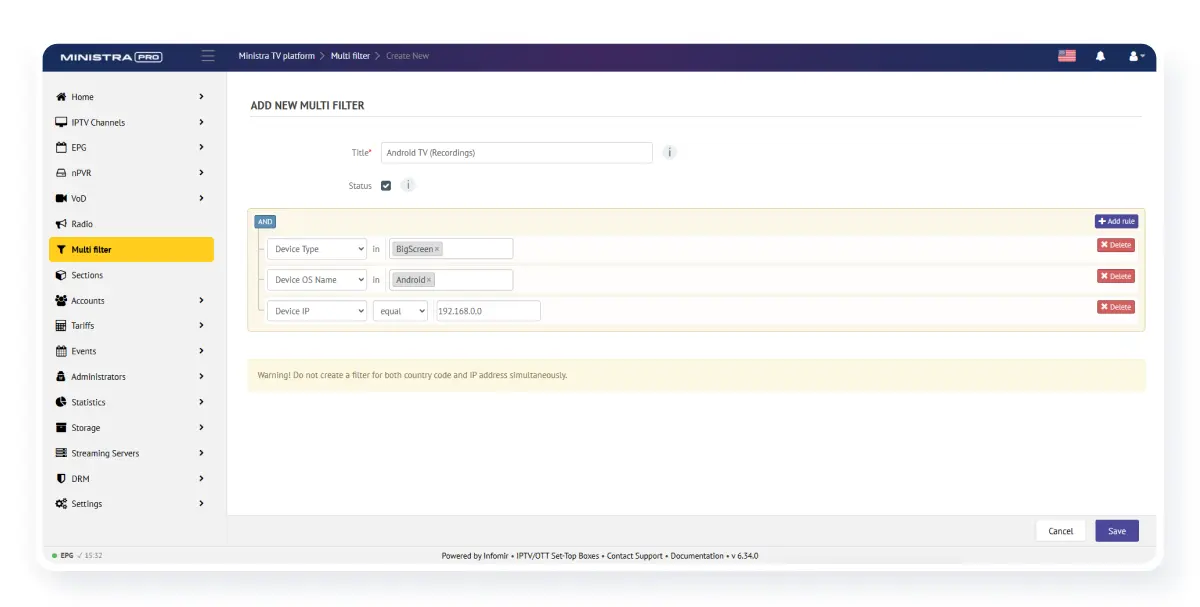
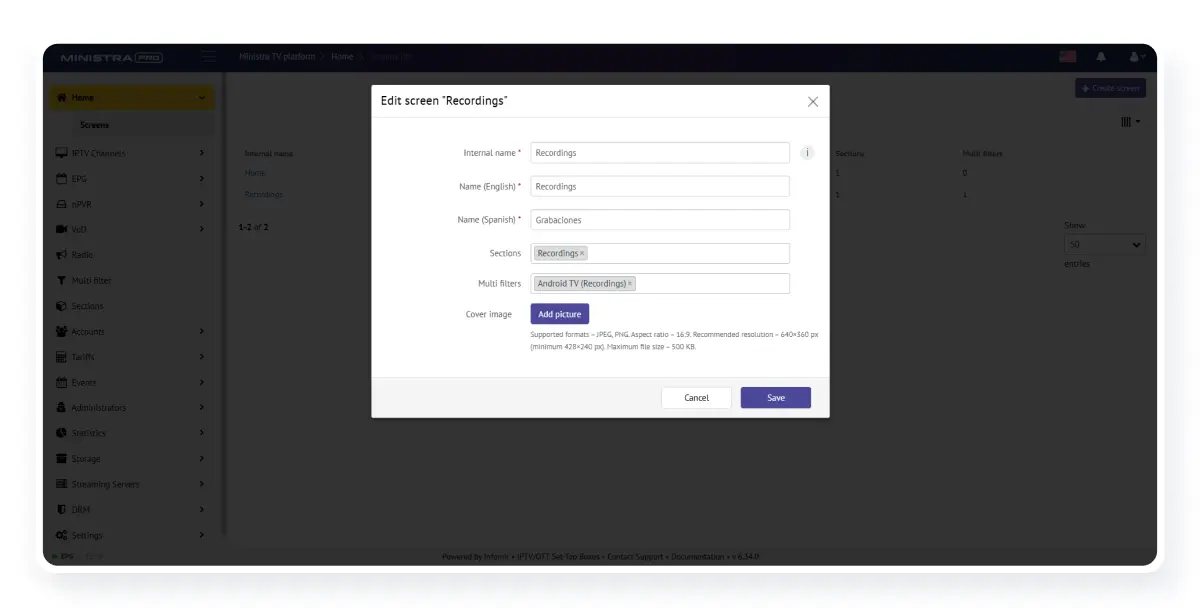
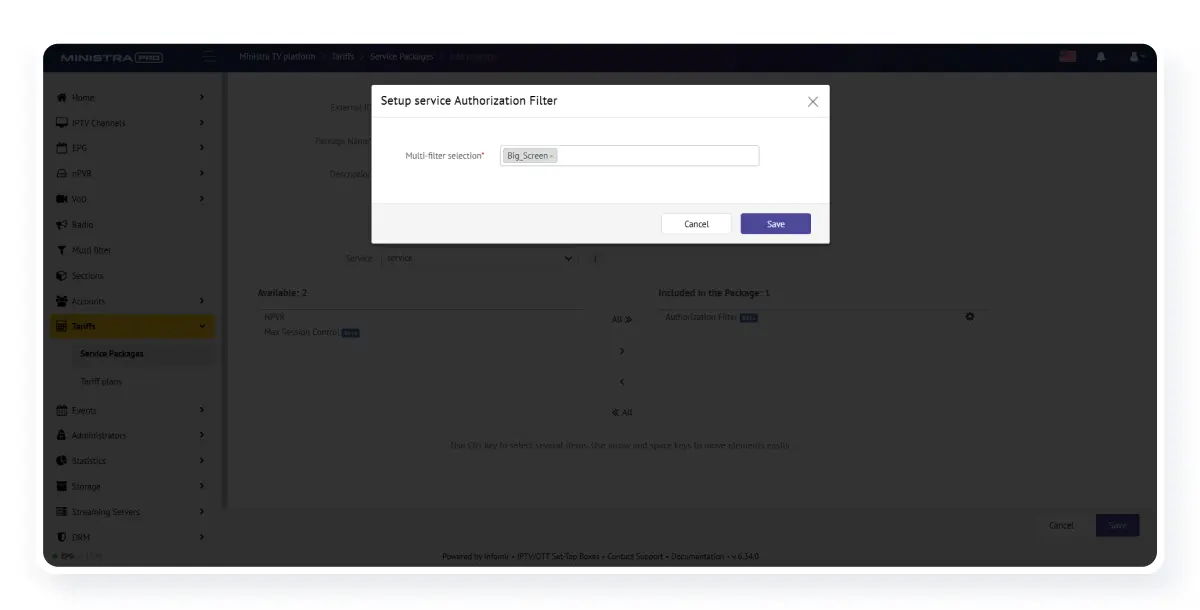
A created filter can always be disabled. The filter applies to Home screens, channels, VOD (starting from backend 6.34), stream servers, and customer service package settings.
This is especially important for operators serving multiple markets or user groups. Flexible access management helps align content rights, technical delivery, and tariff logic without turning each new package into a separate operational project.
5. Subscriber Activation and Device Management Take Too Much Time
Connecting new subscribers is another typical pain point. If every new device requires manual entry of logins, passwords, MAC addresses, or account parameters, support teams lose time and the likelihood of errors increases. This may be acceptable for a small pilot, but it becomes inefficient for a growing IPTV/OTT service.
This problem becomes especially visible during mass activations, such as operator rollouts, hospitality deployments, device replacement campaigns, regional launches, or migrations from legacy systems. Manual processes slow down the project, create unnecessary load on support, and can limit IPTV scalability.
Ministra PRO introduced two features that address this issue. Automatic Login for MAG Linux allows operators to upload a file with MAC addresses so that devices are synchronized automatically. Quick Login for Android allows employees to activate a new subscriber by scanning a QR code with a smartphone, preparing the customer’s device for use faster.
These features matter because activation is often the moment when an operator’s internal efficiency becomes visible to the customer. Faster connection means fewer manual actions, fewer errors, and a smoother service launch.
6. Streaming and Infrastructure Costs Are Difficult to Control
OTT delivery can become expensive if traffic, storage, transcoding, and infrastructure are not managed efficiently enough. An operator may pay for unnecessary playback sessions, store more recordings than subscribers actually use, or maintain more physical servers than the project requires.
This is where technical architecture becomes part of the business model. The more efficiently an operator manages playback, storage, and deployment infrastructure, the easier it is to control the total cost of ownership. For a professional service, applications and content are not enough – it also needs mature OTT infrastructure capable of supporting load growth.
Ministra PRO includes several features that can assist operators in managing these cost factors. For example, HLS streams for Tizen and webOS can help avoid unnecessary format conversion if the operator already receives HLS streams. Playback limit allows the operator to set a timer that stops playback if the user does not interact with the application. NPVR can reduce the need to store a full Catch-up TV archive for all channels by allowing users to record selected programs. Kubernetes support helps deploy, scale, and update platform components more flexibly, while also improving infrastructure manageability and fault tolerance.
In projects that use CDN streaming, such tools are especially important: excessive sessions, inefficient stream formats, and suboptimal storage directly affect costs. Using any one of these features will not automatically reduce costs in every project, but Ministra PRO tools allow operators to control the key drivers of infrastructure expenses, including traffic, storage, playback behavior, streaming format compatibility, and server deployment.
7. Support and Product Development Are Difficult to Scale
An IPTV/OTT platform is not a one-time installation. Operators need updates, documentation, technical support, migration options, and a clear development path. Without this, the platform becomes harder to maintain, and every new device, app update, or user request can turn into a separate support case.
This problem is especially relevant because streaming services are under growing pressure and need to maintain stable viewing quality.
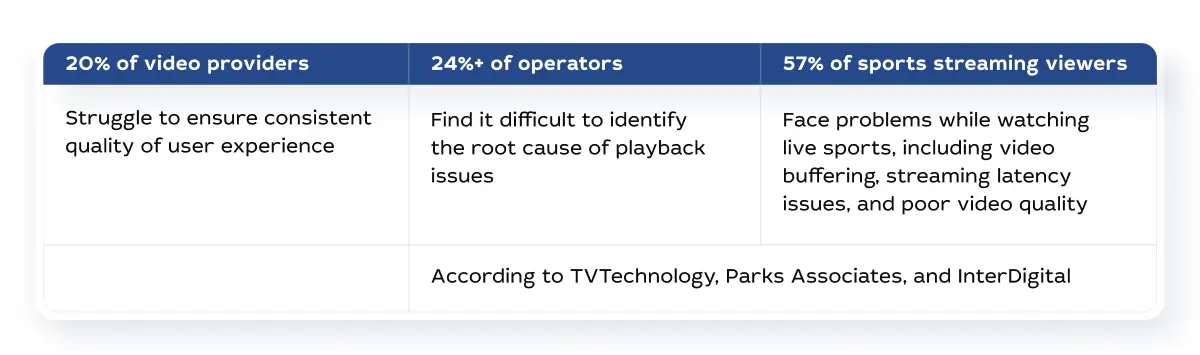
For operators, such video streaming problems are not always related only to the network. Quality can be affected by the stream format, user device, app settings, server infrastructure, CDN, access errors, and user behavior itself. That's why IPTV buffering issues and streaming latency need to be considered comprehensively, not as a single technical failure.
Ministra PRO supports continuous service development through professional support, improvements and updates, applications on multiple platforms, and automated migration from Ministra TV to Ministra PRO. Infomir has also launched round-the-clock AI-powered user support.
This matters because the long-term value of middleware for operators is defined not just by the first launch, but also depends on how easily the service can be updated, supported, migrated, monitored, and adapted to new user expectations. This approach helps build IPTV performance optimization as an ongoing process rather than a reaction to user complaints.
For detailed information on setting up, configuring, and using Ministra PRO features, see the Ministra PRO documentation.
Common IPTV/OTT problems are usually interconnected: weak search reduces engagement, device fragmentation increases support load, rigid access rules complicate content delivery, and manual activation slows service growth.
Ministra PRO helps operators manage these tasks in a unified middleware environment, working with content, devices, tariffs, subscriber access, applications, support, and infrastructure planning across platforms.
Recommended
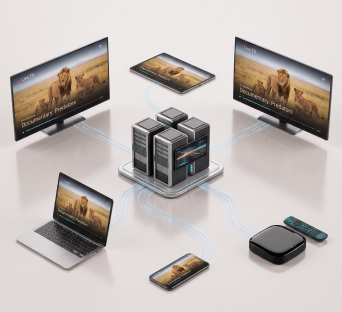
How to Expand an IPTV Platform to Web, Android, iOS, and Smart TV
For an IPTV operator, launching a service on just one type of device is rarely enough anymore. With users now watching linear channels on a TV, viewing content on a smartphone, opening catch-up content in a browser, or using an IPTV set-top box as the main screen at home, expanding a service across multiple client platforms is not simply a matter of releasing additional apps.
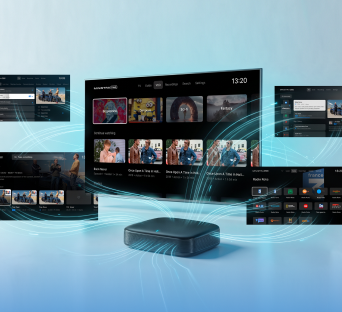
All Content in One Service: Live TV, VoD, Radio, Archive, TimeShift, and EPG in Ministra PRO
A television service has long been more than just a list of channels. Viewers now want to watch live broadcasts, return to a missed program, pause a show, schedule recordings of individual episodes or an entire series using nPVR, or choose a movie from a catalog. At the same time, all these capabilities should feel like parts of a single media environment rather than separate systems.
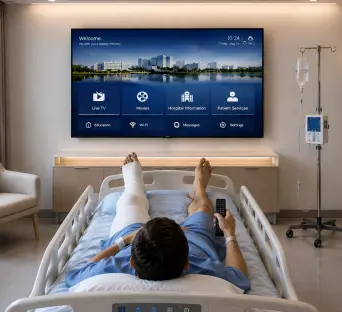
IPTV and the Modernization of Hospital Digital Infrastructure
Because hospitals operate around the clock, it's essential that their digital infrastructure supports stable departmental operations, data security, internal communications, and patient comfort. As a result, a hospital’s digital infrastructure requires a stricter approach than the infrastructure of a hotel, office, or residential complex.