


Product request
You are looking for a solution:

Select an option, and we will develop the best offer
for you


How a TV Operator Can Migrate to IPTV: Architecture, Stages, and Risks

The transition from traditional television to IPTV is rarely just about replacing one signal delivery method with another. For an operator, it usually means changing their entire service model, with content being delivered over an IP network, while subscription management, device management, access rights, and interactive features are handled through a software platform.
This is why a successful migration begins not with purchasing equipment, but with an assessment of the operator network, content, subscriber base, and the future service model.
The main reason for this transition to IPTV is the change in viewer behavior. Linear television remains important, especially for news, sports, and major live events, but audiences increasingly expect access to on-demand content, viewing across multiple screens, and the ability to return to programs they have missed.
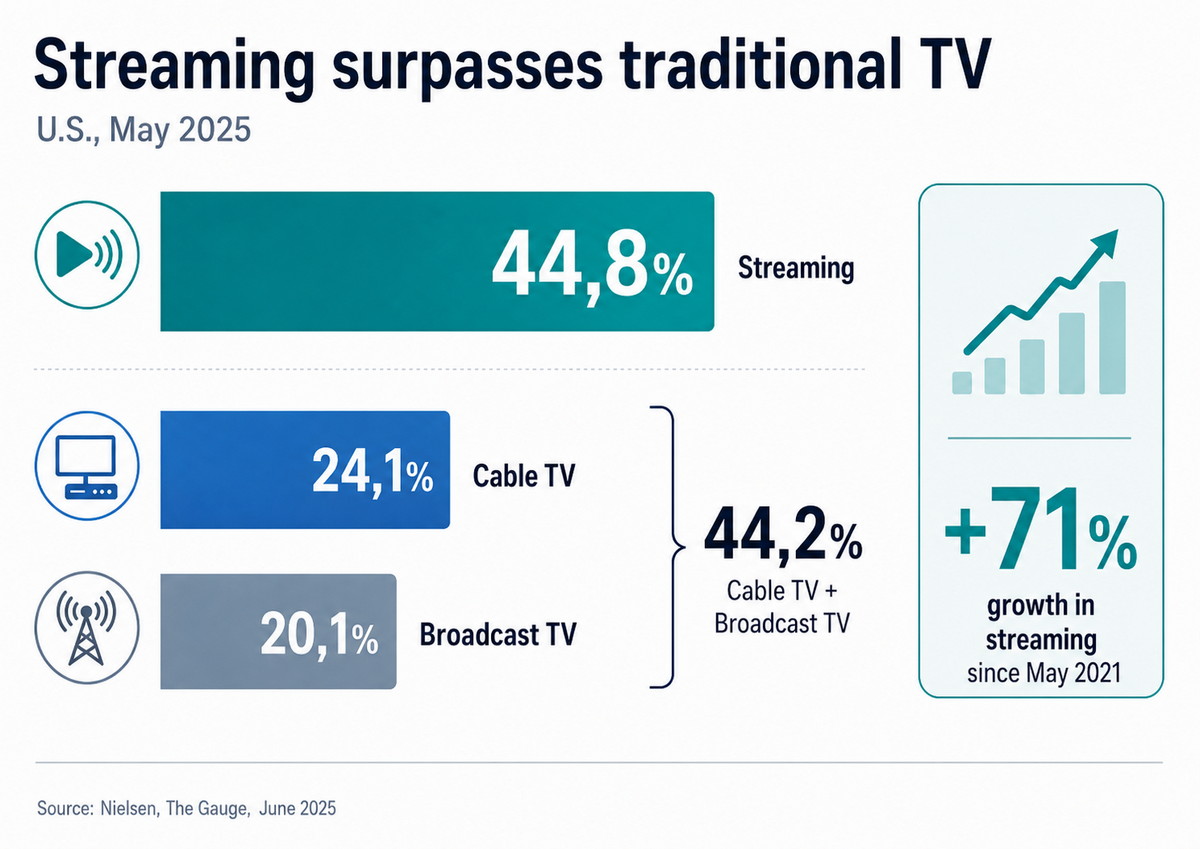
According to Nielsen, streaming accounted for 44.8% of all TV viewing time in the United States in May 2025, surpassing the combined share of broadcast and cable television — 44.2% — for the first time. Compared with May 2021, streaming usage increased by 71%.
What IPTV Means for a TV Operator
IPTV is the delivery of television channels and other video content over an IP network, with the service managed by the operator. Unlike traditional cable, satellite, or terrestrial television, an operator can not only deliver linear streams but also control each subscriber’s access to channels, catch-up archives, video on demand, and additional features.
In DVB-C cable television, the signal is distributed over cable infrastructure in the form of transport streams. In DVB-S, satellite is the primary delivery medium, while DVB-T relies on terrestrial broadcasting. IPTV moves content delivery into an IP infrastructure, where television becomes part of the operator’s broader telecommunications network.
It’s also important to distinguish IPTV from OTT. In a managed IPTV network, the operator controls the delivery infrastructure and can use multicast for linear channels, manage quality of service, and control subscriber devices. OTT generally operates over the public internet and more commonly relies on individual adaptive video streams.
In practice, these models increasingly coexist. Within its own network, an operator can deliver linear TV through a managed IPTV infrastructure, while Smart TVs, smartphones, and web clients can be served using OTT mechanisms. As a result, a single platform can support multiple device types and viewing scenarios.
The key business change resulting from using a TV operator IPTV solution is that the television package becomes a managed digital service. This introduces features such as catch-up TV, pause and rewind for live broadcasts, video on demand, multiple devices under one account, more flexible pricing plans, and centralized subscription management.
IPTV Infrastructure Architecture
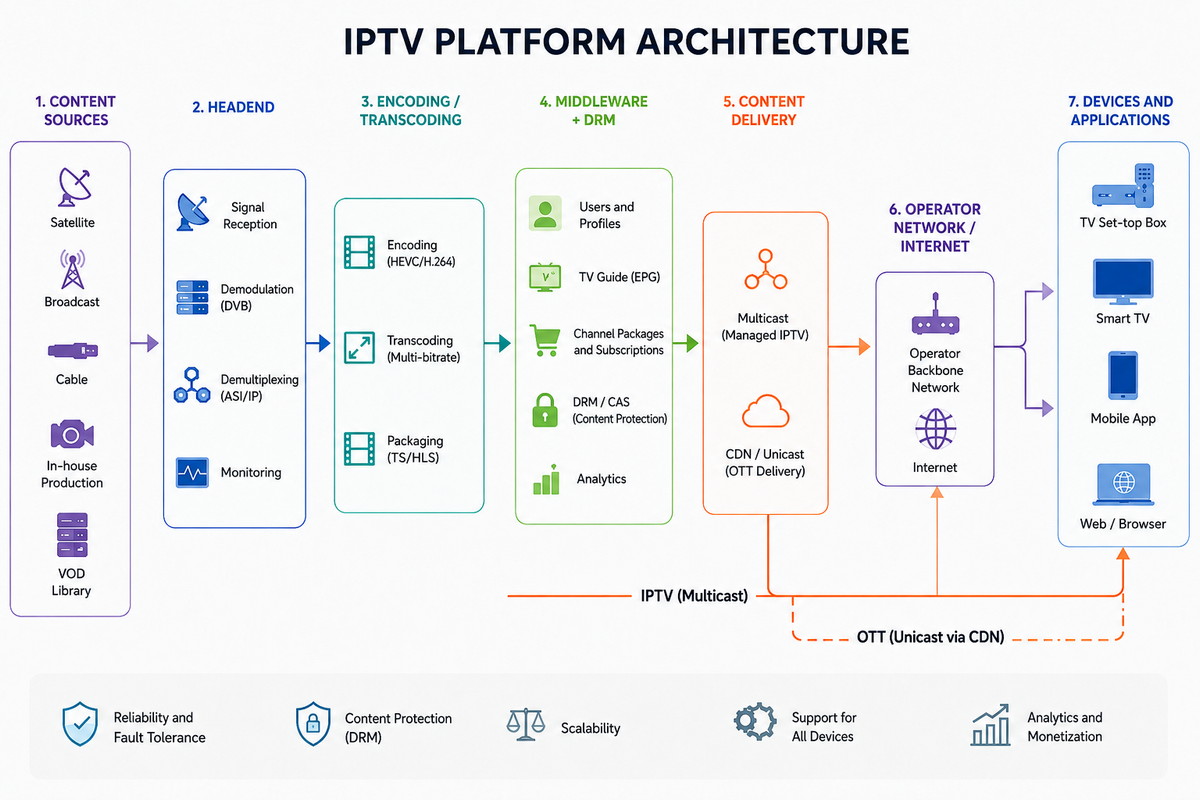
A typical IPTV system consists of several interconnected layers. At the input stage is the television headend. It receives terrestrial, satellite, cable, or IP sources, processes the streams, and passes them further through the system. In many projects, the existing headend can be partially retained if it already outputs digital streams of the required quality.
The next layer is encoding and transcoding. Here, video streams are converted into the required codecs, resolutions, and bitrates. In managed IPTV environments, linear channels can be delivered via multicast, where a single stream is distributed simultaneously to a group of viewers. For OTT and viewing over the public internet, several quality profiles are usually created, allowing the client to switch between them depending on connection conditions.
Middleware is the software layer that connects content with the subscriber. It manages subscription plans, the channel catalog, electronic program guide, user profiles, devices, catch-up archives, and the service interface. Through integrations, middleware receives data from billing and authorization systems, making it the point where access to specific content is determined for each user.
In an IPTV architecture, middleware acts as the connecting layer between content, the operator’s infrastructure, and subscriber devices. Ministra PRO can be used at this level: the platform manages channels, tariff plans, subscriptions, user profiles, EPG, VOD, and other services, while also integrating with billing and authorization systems. This enables operators to centrally control content access and service delivery logic regardless of the type of client device.
Ministra PRO can also serve as the foundation for a multiscreen service, bringing IPTV set-top boxes, Smart TVs, mobile devices, and web clients into a single managed environment. At the same time, the platform is only one component of the overall infrastructure: service stability still depends on the headend, transcoding, DRM, CDN, network quality, and proper integration of all system elements.
A Digital Rights Management (DRM) system is required for content that rights holders permit to be distributed only under certain conditions, and is responsible for both encryption and the issuing of licenses to devices. The choice of DRM when seeking to migrate to IPTV depends on the client platforms and content provider requirements, so this issue should be addressed before a full-scale launch.
A CDN, or Content Delivery Network, reduces the load on central infrastructure and brings video streams closer to users. For a regional operator, this may consist of one or several local nodes, while a large network may use a hierarchy of caches and points of presence.
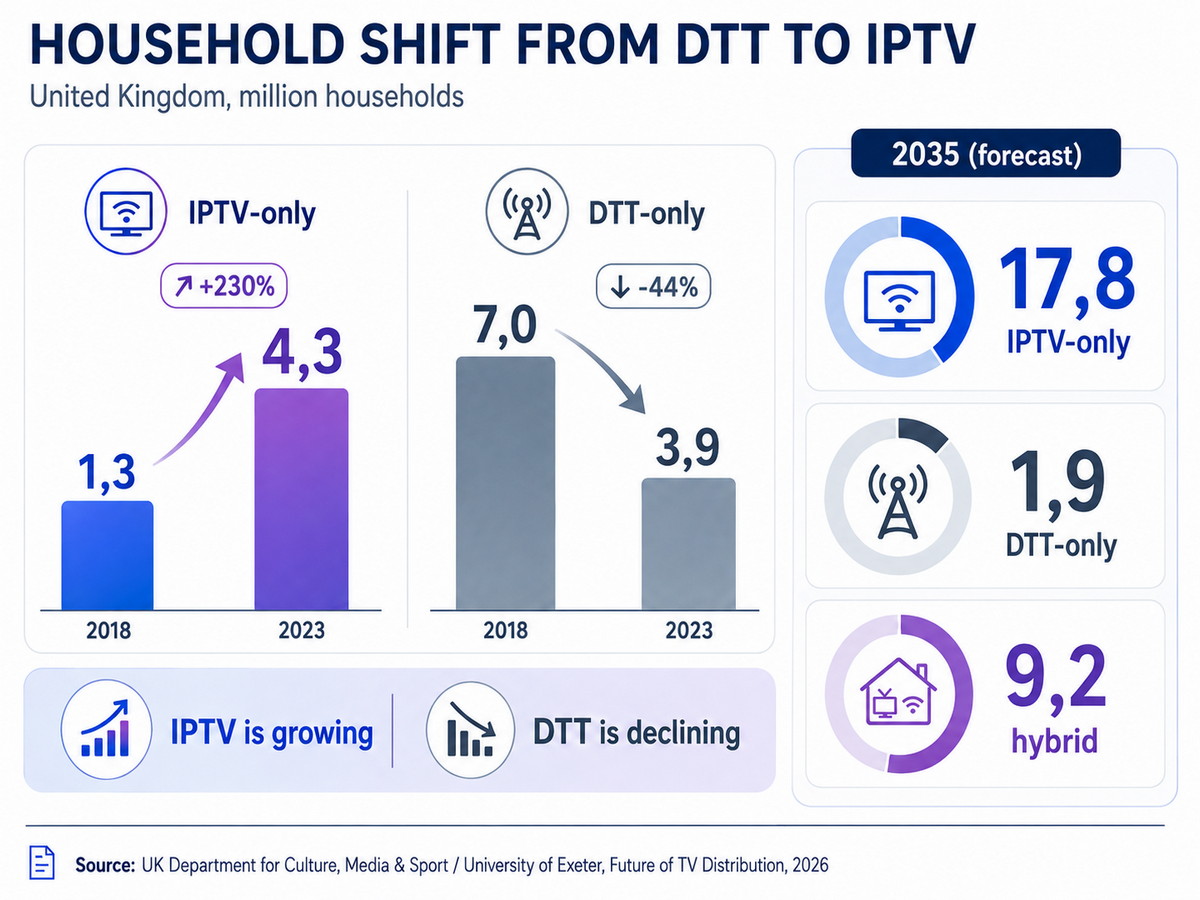
A UK industry study on infrastructure readiness for IP television, published in June 2026, concluded that a full transition from terrestrial and satellite distribution to IP is technically feasible, but requires sufficient bandwidth, equipment compatibility, infrastructure resilience, and proper content delivery planning.
The architecture is completed by end-user devices: IPTV set-top boxes, televisions, smartphones, tablets, and web clients. The more screen types an operator supports, the higher the requirements for testing, DRM, codec compatibility, and application version management.
Stages of an Operator’s Migration to IPTV
The first stage is an audit of the existing TV operator infrastructure. The operator needs to determine which signal sources and headend components can continue to be used, how the backbone and access networks are structured, how much traffic they can handle during peak hours, which billing and authorization systems need to be integrated, and what devices subscribers already use.
This assessment makes it possible to distinguish between components that genuinely need to be replaced and those that can be retained. A complete infrastructure rebuild is not always necessary, and attempting to replace everything at once increases both the cost and the risks of migration.
The second stage is network preparation. For linear IPTV, stable IP routing, multicast, IGMP, and quality control across the path from the headend to the subscriber are essential. For the OTT component, bandwidth, CDN performance, and the correct operation of adaptive multicast streaming become the main priorities.
The network should be assessed not on the basis of average load, but according to peak scenarios: evening hours, major sports broadcasts, and expected subscriber growth. In the 2026 UK study referred to earlier, it specifically noted that projected growth in video traffic allowed operators to calculate and expand network capacity in advance, and managing peak loads is one of the key conditions for resilient IP delivery.
The third stage in IPTV deployment for operators is preparation of the video delivery chain: IPTV headend, source acquisition, encoding, redundancy, and stream monitoring. If the existing headend can deliver the required signals over IP, it’s often more practical to integrate it than to replace it completely.
The fourth stage is the deployment of an IPTV middleware platform and integrations. Subscription plans, subscription logic, the channel catalog, EPG, catch-up archive, video on demand, and access rules are configured. Billing is then connected so that plan changes, service suspension, or activation are automatically reflected in the TV service.
The fifth stage covers devices and applications. The operator determines which set-top boxes will be supported and whether applications are needed for Smart TVs, smartphones, and the web. At the initial stage, it’s safer to limit the number of hardware platforms, since every additional model increases the testing matrix and the amount of ongoing support required.
The final stage is a pilot followed by a gradual commercial rollout. The service is first tested with a limited group of users where channel switching, picture quality, latency, catch-up services, DRM, billing, device updates, and system behavior during failures are all checked. After that, the user base can be expanded gradually without shutting down the legacy TV infrastructure all at once.
Key Risks and Common Migration Mistakes
One common mistake is assessing the network only on the basis of current internet traffic. Television creates a different load profile, with users receiving long-duration video streams simultaneously, while demand becomes highly concentrated during major events. Even powerful headend equipment cannot compensate for insufficient capacity in the transport or access network.
The second issue is component incompatibility. For example, middleware may support a feature that is unavailable on the selected set-top box, a DRM system may work on smartphones but not on an older Smart TV model, or the headend may output a stream that requires additional video transcoding. For this reason, the architecture should be tested as a complete end-to-end chain rather than selecting each component independently.
The third mistake is underestimating CDN requirements, redundancy, and future scalability. When the subscriber base is small, a single central node may operate reliably. Once 4K content, catch-up services, video on demand, and additional devices are introduced, system requirements increase. If scalability is not built into the architecture from the outset, it may need to be redesigned after the commercial launch.
A separate risk concerns content rights. Permission to distribute a channel over an existing cable network does not necessarily include the right to make it available through mobile applications, catch-up services, or OTT outside the subscriber’s home network. Before launch, operators should review agreements with rights holders, permitted territories, supported device types, and content protection requirements.
What Business Opportunities IPTV Creates
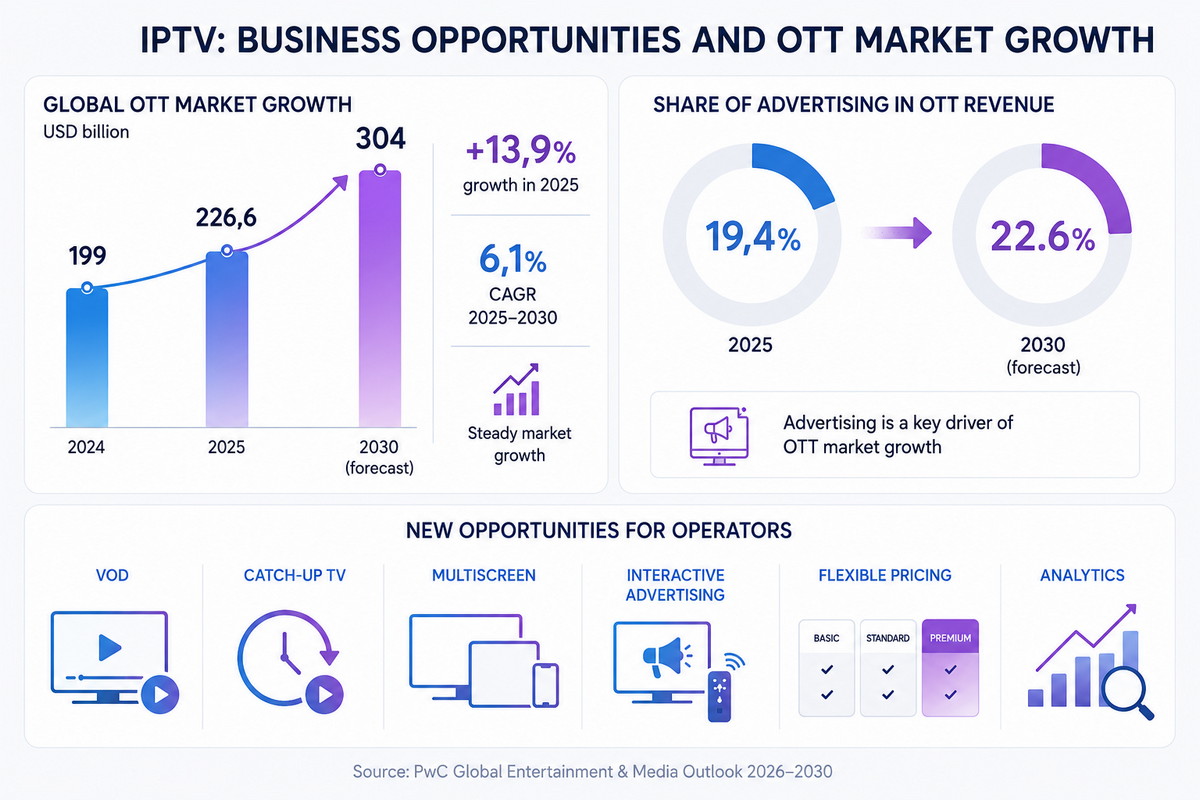
The transition to IP creates value not because IPTV for TV operators is inherently “more modern,” but because it gives them more ways to structure and deliver their services. Linear channels can be supplemented with catch-up TV, video-on-demand libraries, thematic packages, and multi-device viewing. A single account can bring together an IPTV set-top box at home, a Smart TV, and a mobile application.
An IP platform also makes it possible to build more flexible pricing models. Instead of offering one fixed package, operators can combine a basic subscription with additional thematic offers, paid content, and partner services. Interactive advertising is also easier to measure and segment because delivery takes place within a managed digital environment.
However, migration alone does not guarantee revenue growth. Users do not pay for IP as a technology, they pay for content, convenience, and service quality. According to PwC, global OTT revenue grew by 13.9% in 2025, from $199 billion to $226.6 billion. At the same time, subscription fatigue is becoming more pronounced in mature markets, so operators need a clear and understandable package structure as well as new paid features.
Should Traditional TV Be Switched Off Completely?
For most existing operators, a hybrid migration is the safer approach. Cable, satellite, or terrestrial TV can continue operating while IPTV is introduced for new pricing plans, selected regions, or specific subscriber groups. This reduces the risk of a large-scale service outage and gives the operator time to test the infrastructure under real operating conditions.
A full transition makes sense once the IP network has proven its stability, the platform has passed load testing, and the operator understands how to manage devices, updates, and user support. IPTV should be treated not as a one-time replacement of the headend, but as a new operational environment that requires continuous monitoring and development.
The transition from traditional television to IPTV is a step-by-step modernization of content delivery, service management, and subscriber interaction, not simply a matter of replacing equipment.
The most resilient approach begins with an infrastructure audit, continues with network preparation and the integration of the IPTV headend architecture, middleware, DRM, Video CDN, and billing systems, and concludes with a pilot launch followed by gradual scaling. Replacing the entire system at once is not necessary. What’s far more important is to define the target architecture in advance, assess network and content-rights limitations, and build the service so that it can evolve along with the subscriber base.
Frequently Asked Questions
1. How long does an IPTV migration take?
There is no universal timeframe for IPTV migration. A small operator with an IP network already in place and a limited feature set may be able to prepare a pilot relatively quickly, while a large-scale project involving access network upgrades, billing integration, applications, and the migration of a large subscriber base requires a phased rollout. For this reason, the infrastructure audit, pilot stage, and mass migration are usually assessed separately.
2. Does the entire infrastructure need to be replaced?
Not necessarily. Signal sources, parts of the headend, the backbone network, billing systems, and subscriber management systems can often be retained. The key question is whether they can be integrated into the new IP architecture and whether they meet requirements for quality, redundancy, and scalability.
3. Can the existing headend be retained?
Yes, if it can generate digital streams of the required quality and deliver them into the IP environment. In some cases, adding a gateway, transcoding, or a monitoring system may be sufficient. Full replacement is justified if the equipment is outdated, does not support the required formats, or becomes a potential single point of failure.
4. What devices are best to use?
Devices for which the operator can guarantee compatibility, updates, and support. At the beginning of a project, manageability and predictability are usually more important than supporting the widest possible range of devices. Once the service has stabilized, the client device matrix can be expanded gradually.
Recommended
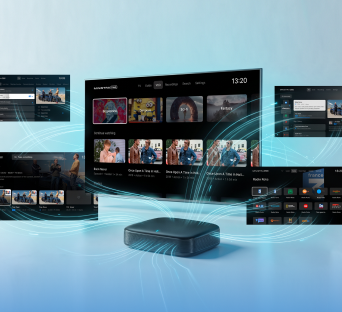
All Content in One Service: Live TV, VoD, Radio, Archive, TimeShift, and EPG in Ministra PRO
A television service has long been more than just a list of channels. Viewers now want to watch live broadcasts, return to a missed program, pause a show, schedule recordings of individual episodes or an entire series using nPVR, or choose a movie from a catalog. At the same time, all these capabilities should feel like parts of a single media environment rather than separate systems.
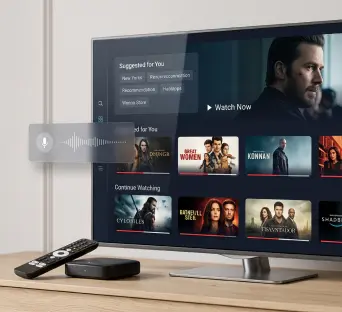
Interactive TV Trends on Google TV: What to Know in 2027
When choosing a television platform for 2027, businesses need to assess more than picture quality and the app selection. Equally important considerations are how viewers will find content, what capabilities the operator will have, and how predictably the equipment will perform after updates.
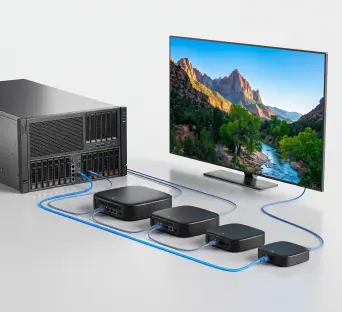
How to Reduce Video Delivery Costs Without Compromising Quality: CDN, Edge Cache, and Multi-CDN
As an IPTV/OTT service’s audience grows, so do both revenue and video delivery costs. For an operator, this means additional terabytes of outbound traffic. For a hotel, it means greater pressure on its internet connection. And in the case of maritime transport, it means the video service has to compete with other applications for limited bandwidth.