


Product request
You are looking for a solution:

Select an option, and we will develop the best offer
for you


Edge Computing in IPTV: Accelerating Content Delivery and Reducing Latency

IPTV/OTT services increasingly operate in conditions where a single data center is no longer enough. Users expect video to start quickly, quality to remain stable, buffering to be minimal, and Live TV, VOD, Catch-up, TimeShift, and sports broadcasts to work predictably. For the operator, this means growing load on backbone channels, CDN, middleware, monitoring systems, and support teams.
Edge computing is an architectural approach in which part of the computing, data storage, and request processing is moved from the central data center to network edge nodes located closer to end users. Edge computing helps solve the problem of an overloaded service, not by “speeding up the entire internet,” but by moving part of the computing, storage, and delivery closer to the user.
Instead of every request for a video, DRM, manifest, or segment passing through a remote central node, some functions are placed on a regional, city-level, or operator-side edge node.
For IPTV/OTT, this is especially important because video remains one of the main sources of network load. According to Ericsson, total global mobile traffic exceeded 220,000,000 TB per month in the second quarter of 2026, while video traffic accounted for about 75% of all mobile traffic by the end of 2025.
Why edge computing has become important for IPTV/OTT
The classic content delivery model is built around a central platform, CDN, and client devices. It works well as long as the load is predictable, the audience is not too geographically distributed, and latency is not a critical factor. But as the subscriber base grows, and as operators launch 4K content, sports broadcasts, interactive features, and multiscreen scenarios, this architecture starts to generate extra costs.
Unfortunately, the problem is not only the subscriber’s internet speed. Even with a good connection, users may experience a slow stream start, delayed channel switching, unstable quality, or overload during peak events. The cause is often somewhere between the central server and the end device: a long route, an overloaded channel, a remote CDN node, insufficient origin server capacity, or inefficient regional IPTV content distribution.
Edge computing reduces the distance between the service and the viewer. In practice, this can mean local caching of popular channels and VOD content, placing an edge CDN inside the operator’s network, processing manifests closer to the user, local load balancing, collecting telemetry, preprocessing data, and integrating with monitoring systems.
What exactly can be moved to the edge level
In IPTV/OTT, not every component needs to be moved closer to the subscriber. Edge architecture is effective where there are repeated requests, high load, sensitivity to latency, or high backbone traffic costs.
The first thing usually moved to the edge level is video segment caching. This is especially useful for VOD, Catch-up TV, and popular Live channels requiring real-time video delivery. If thousands of users in one region are watching the same content, it's inefficient for the operator to fetch it from the central data center every time. Edge content caching reduces load on the backbone network to assist IPTV multicast optimization, lowering the likelihood of buffering.
The second scenario is regional delivery of live streams. For linear TV, edge nodes can receive the stream closer to the audience and distribute it within a local network or region. This helps with network congestion control, reducing channel-switching latency and improving stability during peak loads.
The third scenario is working with service files for streaming video, DRM requests, and access rules. The main authorization and billing logic usually remains in the central platform, but some frequently repeated operations can be optimized, for example, caching files that describe available video segments and stream quality, speeding up content availability checks, offloading central nodes, and sending them only truly necessary requests.
The fourth scenario is quality monitoring. An edge node can collect data on latency, errors, bitrate, buffering, stream availability, and device behavior in a specific region. For the operator, this is important because the problem becomes visible not as an abstract complaint that “IPTV is not working well,” but as a specific failure in a particular network segment, on a particular group of devices, or in a particular area.
Where edge helps save budget
For an IPTV operator, the economic effect of edge computing doesn't usually appear immediately, but over time through lower recurring costs for traffic delivery, CDN, and backbone channels.
If an operator delivers a large volume of video from a central node to all regions, it pays for backbone traffic, CDN, redundancy, and scaling of the central delivery infrastructure. When some popular content is served locally, the central infrastructure is less overloaded, and the network is used more efficiently.
The economic effect of edge computing is especially noticeable for those operators where the central infrastructure regularly handles a large number of repeated requests.
The first example is a wide subscriber geography: if users are located in different cities or regions, delivering all content from a single central node increases the load on backbone channels and may reduce service stability.
The second example is a large share of VOD and archive viewing: the same films, episodes, or program fragments are often requested repeatedly, so it's more efficient to store them closer to the audience.
The third example is regular load peaks: sports broadcasts, news, premieres, local events, and evening prime time can sharply increase the number of simultaneous requests. In such scenarios, edge does not replace CDN or the central platform, but reduces the number of requests to them, offloads the main delivery channels, and helps the service operate more stably during peak hours.
The growth of the edge market itself shows that distributed infrastructure is becoming a mainstream direction for telecom and media services. Grand View Research estimates the global edge computing market at $33.4 billion in 2025 and forecasts growth to $46.7 billion in 2026, and to $328 billion by 2033 at a CAGR of 32.1%.

Edge Computing Market
Edge computing and latency: where the effect will be noticeable
It's important to determine in advance where edge computing will actually have an effect and where the problem lies at another level of the infrastructure. While this architecture doesn't make every stream instant, fix weak Wi-Fi, an unstable home router, an overloaded access network segment, or application errors, it does help to reduce delays caused by remote servers, overloaded central nodes, and unnecessary intermediate hops between the user and the content.
For Live TV, the effect may appear as a more stable channel start, less buffering, and more predictable behavior due to packet loss reduction, even as the audience grows. For VOD, it can mean faster playback start for popular films and episodes. For TimeShift and Catch-up, it can reduce load on central storage and speed up access to frequently requested fragments. For sports broadcasts and interactive scenarios, not only does average latency matter, but also stability: viewers perceive latency spikes and buffering as being worse than a small but consistent delay.
Edge also has particular importance for mobile and multiscreen viewing for QoE improvement. According to Omdia, the global number of online video subscriptions reached 2.24 billion by the end of 2025, up 17.6% compared with 2024 (online video already accounted for 68.4% of all 3.3 billion TV and video subscriptions). The more devices connect to one service, the more important managed delivery becomes — not just increasing the capacity of central IPTV micro data centers.
How an operator can understand whether edge is needed
Of course, edge computing should not be implemented just because of its popularity. First, the operator needs to establish whether there are bottlenecks in the service and, if so, where they are.
If most complaints are related to home routers, Wi-Fi, outdated set-top boxes, or application errors, edge will not deliver the expected effect. But if the problems are concentrated around peak traffic, regional latency, load on the central delivery infrastructure, expensive external CDN, or unstable delivery of popular streams, edge architecture for IPTV operators becomes a practical tool.
The operator should start with an audit. It's necessary to understand where subscribers are located, which channels and VOD items create the main load, when peaks occur, how traffic is distributed across regions, how much it costs to deliver one gigabyte, which errors support teams see most often, and where the source of latency is located. Without this data, edge can easily become expensive infrastructure without a clear economic effect.
In practice, a good first step is not a full migration of the service, but a pilot. For example, the operator can select one region, one subscriber group, one popular VOD catalog, or a set of live channels and compare metrics before and after implementing IPTV edge caching.
It's important to measure not only network latency, but also business metrics: fewer support requests, lower load on the central channel, playback stability, video start time, buffering frequency, and delivery cost.
The most common implementation mistakes
The first mistake is moving too many functions to the edge. The central platform, billing, core access logic, account management, and critical administrative functions often need to remain centralized. The task of edge is to accelerate delivery and reduce load, not to create several poorly synchronized copies of the service.
The second mistake is ignoring security. An edge node becomes part of the content delivery infrastructure, so it must be included in the overall security model: access control, updates, monitoring, logs, redundancy, key protection, and correct DRM operation. It's especially important not to store unnecessary user data at the edge level unless there is an architectural need for it.
The third mistake when seeking to facilitate backbone channel offload is implementing edge without a caching strategy. Not all content is equally popular. If the cache is filled randomly, rarely used content may push out channels or VOD items that are actually in demand. The operator needs rules, including what to cache permanently, what to cache temporarily, how to warm up the cache before a sports event or premiere, when to clear outdated fragments, and how to track what share of requests is served locally without contacting the central delivery infrastructure.
The fourth mistake is failing to integrate edge with monitoring. Edge nodes must be visible in the general observability system. The team needs to understand where load is growing, where the share of requests served from cache is falling, where errors appear, which users switch to the central node, and why quality is decreasing.
How to plan infrastructure upgrades
For an IPTV/OTT operator, infrastructure modernization is best started with an architectural map of the service. The system needs to be broken down into key levels: signal reception and processing, transcoding, central delivery infrastructure, middleware, DRM/CAS, CDN, edge nodes, user applications, and devices.
Once the different levels have been established, it becomes clear which elements actually benefit from being placed closer to the user, and which should remain in the central part of the platform.
Edge nodes should be designed with three horizons in mind. The first is current load: which regions and scenarios are already creating problems. The second is service growth: how many new subscribers, devices, and 4K streams are expected in the next 12–24 months. The third is the operating model: who will maintain edge nodes, update software, analyze metrics, and respond to incidents.
It's equally important to define success criteria in advance. The operator needs to understand which metrics will be used to evaluate the effect of edge architecture, such as whether load on the central delivery infrastructure has decreased, whether the share of requests served from local cache has increased, are there fewer buffering complaints, does VOD content start faster, is Live TV more stable during peak hours, and have external traffic delivery costs have been reduced.
Without such criteria, it's difficult to evaluate an edge project objectively: the infrastructure may become technically more complex without producing a clear ISP edge streaming solution, either economically or in terms of its user-facing effect.
The role of middleware and applications
Edge computing does not work in isolation from the rest of the IPTV/OTT platform. Middleware, billing, user applications, devices, and CDN must exchange data correctly. If middleware manages accounts, tariffs, devices, and access to content, the edge level must take these rules into account and not break the authorization model.
For operators using middleware platforms such as Ministra PRO, edge can be viewed as an infrastructure extension of the core delivery and service management platform. Middleware remains the center for managing users, content, packages, and devices, while edge helps deliver in-demand streams and data faster and more reliably using distributed nodes, closer to the viewer.
This approach is especially useful for operators with a distributed subscriber base, hotel and campus networks, regional providers, and projects where backbone traffic costs noticeably affect the economics.
Edge computing in IPTV with regional servers is not a replacement for CDN, middleware, or engineering architecture, but part of the overall IPTV/OTT infrastructure. It helps bring content delivery closer to the user, reduce load on central nodes, lower latency using adaptive bitrate streaming, improve playback stability, and better control service quality across regions.
However, edge should only be implemented after auditing traffic, delivery routes, channel costs, user complaints, and real playback problems: for some operators, optimizing CDN and monitoring is enough, some need regional caches, while others will require a full edge architecture with local delivery, telemetry, and caching rules.
Recommended
All Content in One Service: Live TV, VoD, Radio, Archive, TimeShift, and EPG in Ministra PRO
A television service has long been more than just a list of channels. Viewers now want to watch live broadcasts, return to a missed program, pause a show, schedule recordings of individual episodes or an entire series using nPVR, or choose a movie from a catalog. At the same time, all these capabilities should feel like parts of a single media environment rather than separate systems.
Interactive TV Trends on Google TV: What to Know in 2027
When choosing a television platform for 2027, businesses need to assess more than picture quality and the app selection. Equally important considerations are how viewers will find content, what capabilities the operator will have, and how predictably the equipment will perform after updates.
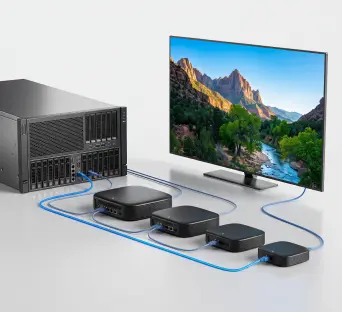
How to Reduce Video Delivery Costs Without Compromising Quality: CDN, Edge Cache, and Multi-CDN
As an IPTV/OTT service’s audience grows, so do both revenue and video delivery costs. For an operator, this means additional terabytes of outbound traffic. For a hotel, it means greater pressure on its internet connection. And in the case of maritime transport, it means the video service has to compete with other applications for limited bandwidth.