

Product request
You are looking for a solution:

Select an option, and we will develop the best offer
for you


Why Middleware Must Be Ready for Hybrid Business Models: SVOD, TVOD, AVOD, and Bundles
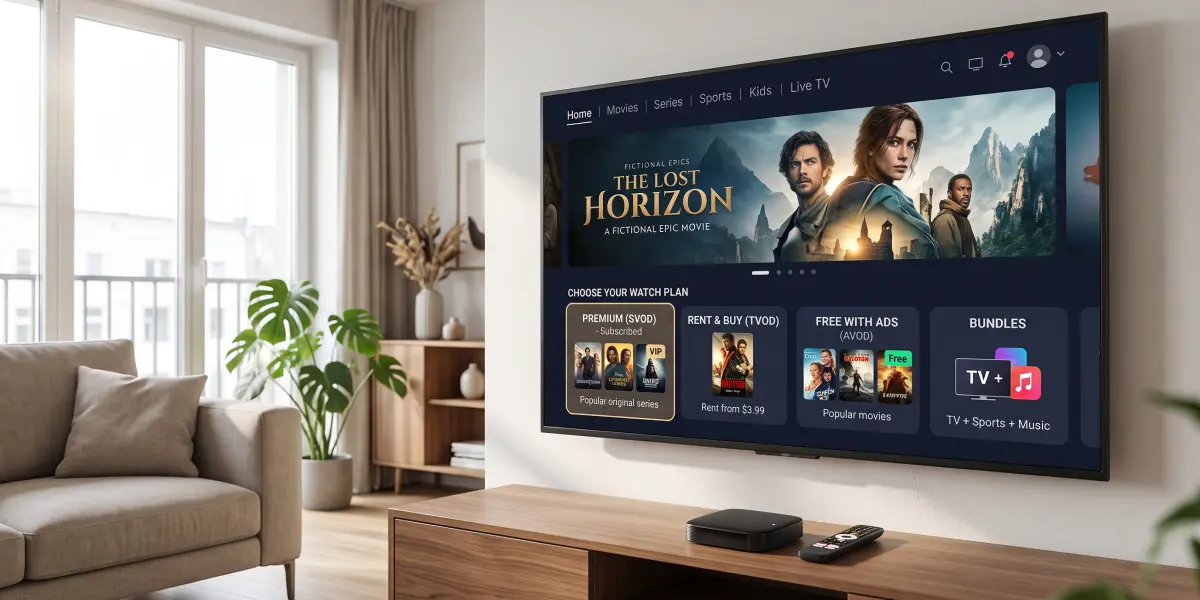
For a long time, IPTV and OTT operators treated the choice of monetisation model as a one-time decision. This involved choosing between subscriptions or advertising, building a service around that model, and continuing to operate.
However, this approach no longer reflects how users consume content and pay for services. Viewers now switch between ad-free plans, cheaper ad-supported subscriptions, and one-time content purchases, sometimes even within the same month.
Operators that can offer different OTT revenue models simultaneously have more opportunities to retain subscribers and increase revenue per user. The main limitation to this is the middleware's ability to support hybrid IPTV monetisation. If subscriptions, advertising, on-demand content catalogues, and service packages operate in separate systems, launching each new offer becomes a separate integration project.
This article looks at why IPTV/OTT operators need Hybrid monetisation strategies, as well as providing a practical checklist of middleware requirements that must be met before combining SVOD, TVOD, AVOD, and bundled offers within a single service.
Why a Single Monetisation Model Is No Longer Enough
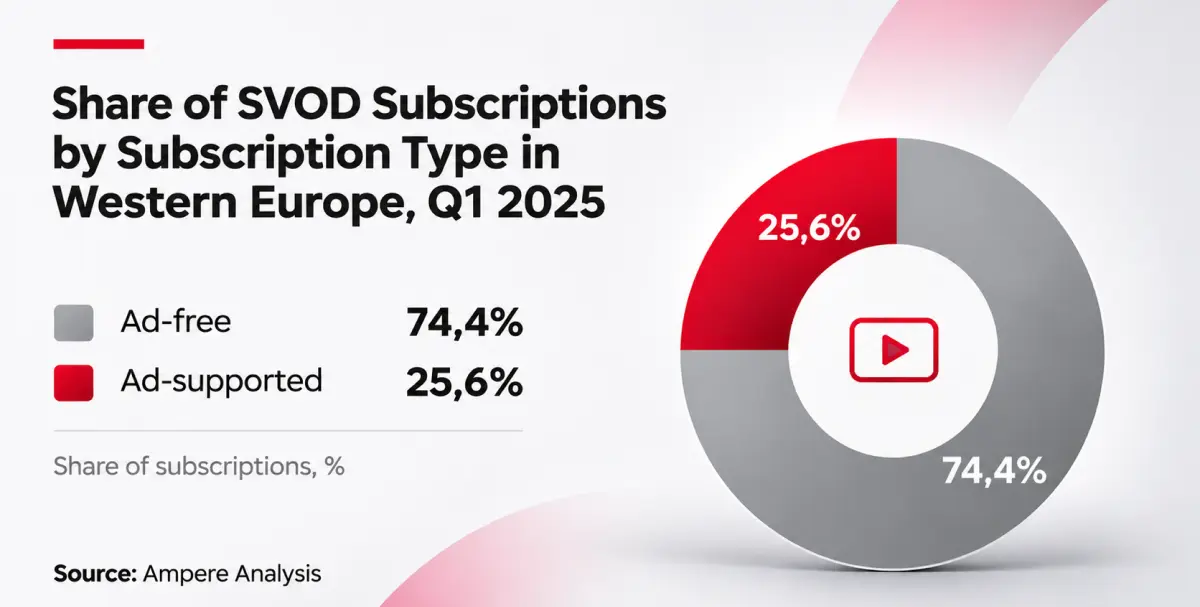
An IPTV platform business model based solely on Ad-supported subscription plans is no longer experimental. According to Ampere Analysis, nearly 70 million users in Western Europe subscribed to ad-supported plans in the first quarter of 2025, accounting for 25.6% of all SVOD subscriptions in the region.
In the United States, according to Antenna, the number of ad-supported premium SVOD subscriptions reached approximately 100 million by the end of the first quarter of 2025. This represented an 89% increase from 53 million two years earlier.
Understanding who chooses these plans is equally important. Antenna found that 65% of ad-supported subscriptions in the U.S. came from new users who had not previously subscribed to the respective service. However, at Netflix, 40% of ad-supported subscribers were existing customers who had switched from more expensive ad-free plans. For other premium services, this figure was 6%.
In other words, a cheaper ad-supported plan can both attract new audiences and retain price-sensitive subscribers who might otherwise cancel their subscriptions altogether.
For IPTV operators, the question is no longer which monetisation model to choose, but how many models the service can support simultaneously. We reached a similar conclusion in our article comparing AVOD and SVOD models: there is no universally optimal model, and a hybrid approach combining several options may prove the most effective.
SVOD, TVOD, AVOD, and Bundles: How They Work Together
What is the difference between SVOD vs TVOD vs AVOD? Let's briefly examine the main models.
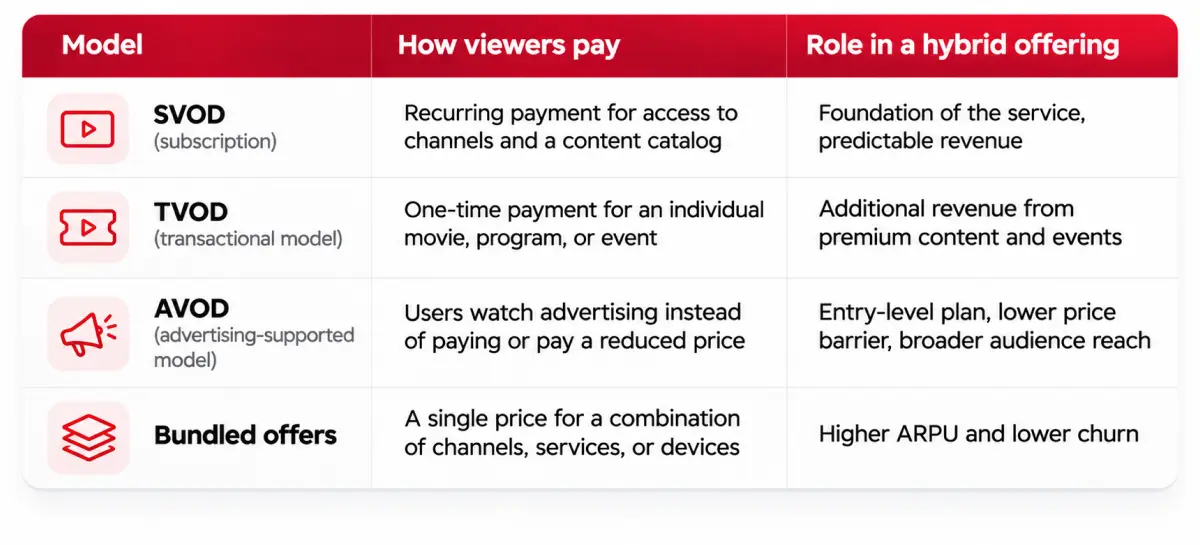
A hybrid monetisation model in IPTV/OTT combines these elements within a single service. A typical structure looks like this:
- Subscriptions as the foundation. Most revenue continues to come from recurring payments for access to linear television and content catalogues.
- TVOD for premium content and events. New movies, sports broadcasts, and concerts are sold separately, without requiring all subscribers to upgrade to a more expensive plan.
- AVOD as an entry-level plan. An ad-supported offering lowers the price barrier for new viewers and provides a cheaper alternative for users who might otherwise cancel their subscriptions.
- Bundled offers. Content bundling using thematic channel packages and combined offerings increases revenue per subscriber and helps prevent some users from cancelling their subscriptions.
OTT subscription bundling offers and channel packages connect the individual elements of a hybrid model. Instead of charging a single fixed price, operators create offers for different audience segments: a family package, a sports add-on, a hotel plan, or an entry-level ad-supported offering.
The more segments an operator serves, the more important it becomes to manage all these offers through a single system.
What Middleware Capabilities Are Required for Hybrid Models?
Can a single IPTV middleware platform support subscriptions, advertising, and one-time content purchases simultaneously? Yes, provided its architecture supports these capabilities.
When evaluating an existing platform or selecting a new one, operators should check the following features. A broader list of criteria is available in our guide, How to Choose Middleware: Ministra PRO for IPTV/OTT Projects.
1. Flexible subscription plans and service packages. Comprehensive OTT subscription management capabilities should enable operators to group channels into thematic and subscription packages, create plans for different audience segments, and modify them without involving developers. If launching a new plan requires changes to the software code, its market introduction may be delayed by months.
2. Prepaid and postpaid billing models. Different countries and audience segments use different payment methods. Middleware should support flexible billing (both prepaid and postpaid subscriptions) and integrate with external billing systems so that launching a new offering does not require developing a separate payment mechanism.
3. Advertising within the service. An ad-supported streaming plan requires advertising to be displayed within the same interface subscribers already use, rather than in a separate application. Before launch, operators should check how ads are delivered, which subscription plans include them, and how their effectiveness will be measured.
4. On-demand content catalogues alongside linear TV. TVOD and catalogue-based offerings require a Video Club or a similar on-demand section available alongside TV channels, archives, and other services.
5. A unified back office for all devices. Subscribers watch content on set-top boxes, Smart TVs, and smartphones. Subscription plans, service packages, and access rules should be configured centrally and applied across all screens. Account and device management play an important role here. We discussed this in more detail in our article, Subscription and Household Management in Ministra PRO.
6. Analytics by subscription tier. Operators need to see revenue from each plan, the number of subscribers switching between offers, and churn rates. Without this information, it is impossible to determine whether an ad-supported plan attracts new viewers or simply encourages existing subscribers to downgrade from more expensive offerings.
What should operators pay particular attention to before launching an ad-supported plan? First and foremost, points 2, 3, and 6: which plans display advertising, how the ad-supported tier is billed compared with standard subscriptions, and whether revenue and churn can be compared across individual plans from day one.
Common Mistakes When Introducing a New Monetisation Model
Adding a new model through a separate system. If an operator introduces advertising or one-time content payments using a third-party tool that does not exchange subscriber data with the middleware, two independent sources of information emerge. Customer support teams cannot see the complete picture, and billing errors become more frequent.
Offering too many subscription plans. Hybrid monetisation does not mean creating dozens of plans. If subscribers cannot understand the differences between offers within a few seconds, they may choose the cheapest option or decide not to subscribe. It’s better to start with two or three clearly defined plans and add packages where demand is supported by data.
Launching without analytics. Introducing a new plan without dedicated reporting means making decisions based on assumptions. Before launch, operators should establish the key metrics: the number of subscribers on each plan, revenue by plan, migration between plans, and churn.
Ignoring total cost of ownership. Every additional system involves licensing, integration, and maintenance expenses. Our article on how cost-effective middleware increases IPTV operator profits explains why the overall cost of the platform is just as important as its functionality.
As a rule, small IPTV operators do not need a hybrid model from day one. They can start with subscriptions and one or two additional packages. The important thing is to choose middleware that already supports other models. This way, introducing an ad-supported plan or one-time content purchases in the future becomes a configuration task rather than a migration to another platform.
How MAG and Ministra Support Hybrid Monetisation
Infomir develops both client devices and software platforms, allowing operators to build hybrid services using solutions from a single manufacturer.
- Ministra TV Platform enables operators to monetise services through prepaid and postpaid subscriptions or advertising, including full implementation of the AVOD model. In the back office, operators can group TV channels into thematic and subscription packages, create subscription plans, and configure Video Club, Audio Club, and Radio services.
- Support for MAG set-top boxes in Ministra is provided free of charge, together with the Ministra Back Office administration portal. Support for Smart TV and mobile platforms is paid.
- Ministra PRO is offered to IPTV/OTT operators through annual subscription plans that include installation, configuration, technical support, and updates. The platform is compatible with billing systems, DRM solutions, and analytics tools.
This is how flexible middleware supports multiple business models and billing, giving operators the ability to manage subscriptions, packages, advertising, and on-demand content through a unified back office. At the same time, MAG devices provide subscribers with a familiar viewing experience on the big screen.
Hybrid monetisation allows IPTV/OTT operators to adapt subscription offerings to the needs of different audience segments, diversify revenue streams, and reduce churn. However, the effectiveness of this approach depends not on the number of available models, but on the capabilities of the middleware: centralised management of subscriptions, advertising, and service packages, billing integration, and analysis of commercial performance.
Therefore, when selecting a platform, operators should consider the ability to introduce new monetisation methods without complex integrations or additional expenses associated with replacing the system, as well as their current requirements.
If you are planning to introduce new subscription tiers, service packages, or an ad-supported offering, contact the Infomir sales team. We will help you select MAG devices and the Ministra platform that match your business model. Contact Infomir Sales.
FAQ
What is a hybrid monetisation model in IPTV/OTT?
It’s a service model that combines several revenue streams, including subscriptions (SVOD), one-time content purchases (TVOD), advertising (AVOD), and bundled offers, rather than relying on a single approach.
What is the difference between SVOD, TVOD, and AVOD?
SVOD involves recurring payments for access, TVOD uses pay-per-view for an individual movie, program, or event, and AVOD provides access to content in exchange for watching advertisements, either free of charge or at a reduced price.
Can a single IPTV middleware platform support subscriptions, advertising, and one-time content purchases simultaneously?
Yes, provided it supports flexible subscription plans and packages, prepaid and postpaid billing models, advertising within the service, and an on-demand content catalogue, all managed through a unified back office. Ministra PRO is one example.
What should operators check in middleware before launching an ad-supported plan?
Operators should verify how advertisements are delivered and assigned to specific plans, how the ad-supported tier is billed compared with standard subscriptions, and whether revenue and churn can be tracked separately for each plan.
How do bundled offers fit into a hybrid model?
They allow operators to create offers for different audience segments, increase revenue per subscriber, and reduce churn while complementing the basic subscription.
Does a small IPTV operator need a hybrid model from day one?
Not necessarily. Hybrid OTT monetisation can start with subscriptions and a few packages, but operators should choose middleware that already supports advertising and one-time content purchases. This allows these models to be introduced later, enabling revenue diversification without migrating to another platform.
Recommended
IPTV Security: How Ministra PRO Protects Your IPTV Platform
The security of an IPTV service depends on more than protecting the video stream. A vulnerability in a server component can put platform availability, subscriber data, and content access management at risk. IPTV security therefore requires infrastructure updates, API protection, and playback controls working together.

Observability in IPTV: Which Metrics Operators Need to Monitor to Identify Problems Quickly
For an IPTV/OTT operator, service stability depends on more than the availability of servers and channels. The platform may be running without critical errors and the CDN is delivering the video stream successfully, but users still experience slow stream startup, buffering, or denied access to content.

Why RDK Is Becoming a Key Platform for Operator TV
Choosing an interactive TV platform determines more than just the appearance of menus and the apps available. It also affects how difficult it is to add new set-top box models, update software, troubleshoot problems, and switch hardware suppliers.