


Product request
You are looking for a solution:

Select an option, and we will develop the best offer
for you


Who Ministra PRO is Built For: Key Benefits and Target Segments
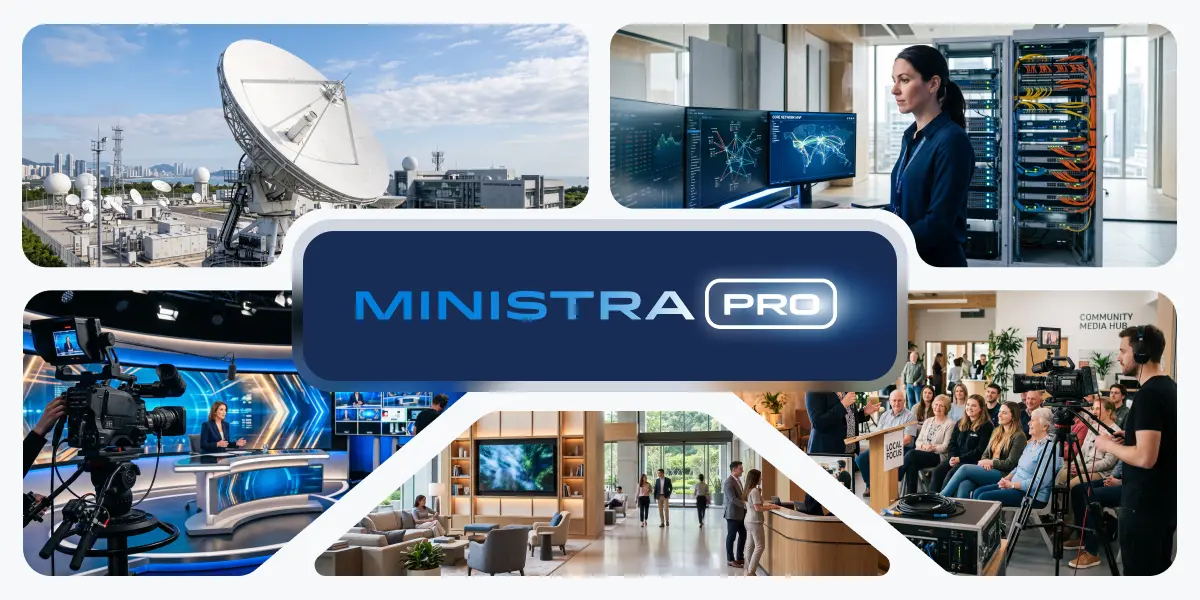
Ministra PRO is a platform for IPTV/OTT/VOD projects that helps operators manage a video service as a unified system, including content, subscribers, devices, tariffs, end-user applications, and access to streams.
Not only is the platform suitable for traditional IPTV operators, but it can also be used to modernize an existing TV service, launch IPTV for internet service providers, distribute content directly, organize an internal TV network for facilities, and support niche media projects.
In this article, we look at who uses IPTV middleware and explain how the value of Ministra PRO is different for each particular audience: some need interactive TV, others require infrastructure monetization, while others need control over content, devices, or a local audience.
1. Cable and satellite TV operators
For cable and satellite operators, Ministra PRO is useful in scenarios where a company moves from traditional television to a more flexible IPTV/OTT model. Such companies already have a subscriber base, content packages, support processes, and an understanding of the television market. The platform’s role is to add a digital management layer to this model.
In addition to subscriber management, an operator can expand linear broadcasting with interactive features, such as EPG, Time-shift, Catch-up, VOD, radio, and content with multiple audio tracks and subtitles. These features help make the service more convenient for users who already expect not only TV channels, but also archive, on-demand viewing, and access from different devices.
The key benefit of Ministra PRO for this segment is managed modernization of the existing TV business. The operator does not need to completely change its operating model as it can develop the IPTV/OTT direction step by step while maintaining control over content, subscribers, tariffs, and user access.
2. Internet providers
For internet providers, Ministra PRO is a tool for launching an IPTV/OTT service on top of an existing network. The provider already serves subscribers, infrastructure, support, and billing processes, so a video service can become an additional offering and strengthen bundled packages.
The main goal for this type of customer is to add a managed television service to existing services. This may be an IPTV package for individual users, an offer for apartment buildings, local networks, or B2B customers.
The key benefit of Ministra PRO for internet providers is the ability to quickly launch an IPTV service and manage tariffs flexibly. The operator can create basic and extended packages, connect VOD, and set restrictions by devices, subscription periods, and available features.
Support for different client platforms is also important. Users can watch content on a TV set-top box, Smart TV, smartphone, tablet, through a web player, or on TV devices running Android TV, Fire TV, Roku, Apple tvOS, and other platforms. For the provider, this reduces dependence on a single device type and helps offer the service to different subscriber groups.
3. Content owners, broadcasters, and distributors
For content owners, broadcasters, and distributors, Ministra PRO is important as a platform for direct content delivery to users. If a company owns TV channels, a video library, radio stations, or content rights, it needs not only to transmit media, but also to manage access, packages, and distribution terms.
Ministra PRO allows operators to work with IPTV, VOD, and radio content. The operator can add and edit IPTV channels, manage publishing, organize channels by genre, and add EPG. For VOD scenarios, it’s possible to add and edit movies, series, trailers, external subtitles, schedule content availability, and create categories and genres. For radio, operators can manage radio stations, publish them, or remove them from publication.
As an OTT solution for content providers, the key benefit of Ministra PRO is control over content distribution and monetization. For example, a company can create a basic TV channel package, a separate VOD package, a thematic package, an additional paid option, or an add-on. These packages can then be linked to tariffs and assigned to different subscriber groups.
This gives the content owner both a delivery channel and a managed distribution mode where it’s possible to define which content is available to a user, under what conditions, in which package, and within which tariff.
4. Hotels, hospitals, campuses, and residential complexes
In hotels, hospitals, campuses, and residential complexes, IPTV often functions as part of the facility’s internal digital infrastructure, rather than a mass commercial service. Here, TV channels are not the only priority. Manageability is just as important, including which devices are connected, what interface the user sees, which functions are available, and how quickly an administrator can change settings.
In a hotel, IPTV can be used for rooms and public areas. In a hospital, for patient rooms, waiting areas, and information screens. On a campus, for an educational, informational, or entertainment network, and in a residential complex, for apartments, club rooms, or shared spaces.
The key benefit of Ministra PRO for such facilities is centralized management of devices and the user environment. A single account can be associated not with a specific person, but with a room, apartment, patient room, space, or group of devices. This simplifies administration and makes service management clearer.
In such projects, it’s often necessary to restrict access to application settings so that the user cannot change general parameters, log out of the account, or sign in to another one. It’s also important to preserve a unified visual style, centrally manage channels, and maintain a consistent user experience across different areas of the facility.
For this audience, Ministra PRO is valuable as a tool for an internal TV network, with device control, interface configuration, and the ability to scale across several rooms, buildings, or facilities.
5. Niche projects and local communities
The fifth segment includes niche projects, local communities, small media initiatives, municipal, corporate, or specialized networks. These customers may not need a large public OTT service, but they do need a managed content delivery system, such as for hospitality TV, used for a specific audience.
A project may start with one region, one topic, one organization, or a limited community. Over time, it can add new devices, content packages, viewing platforms, and service scenarios.
The key benefit of Ministra PRO for niche projects is controlled launch and the ability to grow without complex manual support. The platform helps bring together content, accounts, tariffs, devices, applications, and access in one system.
Remote actions are also useful for local projects, but they should be viewed as a supporting tool rather than the platform’s core value. An administrator can send a message to users, update the list of available TV channels, and, for Infomir set-top boxes, perform individual service actions such as rebooting the device or restarting the application on the set-top box.
This is suitable for projects that need not only broadcasting, but also control over the entire service logic – from content and access to device support and user communication.
What these segments have in common
All five audiences use Ministra PRO differently.
Cable and satellite operators modernize a traditional TV service. Internet providers launch IPTV as an additional service on top of their infrastructure. Content owners manage direct delivery and media monetization. Hotels, hospitals, campuses, and residential complexes build an internal TV environment. Niche projects get a managed platform for local broadcasting and the development of a specialized service.
These groups all share one common task: to manage an IPTV/OTT service as a unified system, not as a set of separate tools. Ministra PRO works as an IPTV solution for system integrators, helping solve this task at several levels: managing IPTV, VOD, and radio content, service packages and tariff plans, subscriber and household accounts, end-user applications, events, and multiscreen streaming infrastructure.
All elements are connected: accounts are linked to tariffs, tariffs include service packages, packages define available content, the backend manages access to streams, and end-user applications deliver the service to different devices – modern middleware for IPTV business.
Meeting a growing demand for white label applications, the Ministra PRO platform is suitable for a range of customers. For some, it’s a way to develop an existing TV business, while for others it’s a tool for launching a new IPTV/OTT service. Some customers use the platform for internal broadcasting and device management. But in all these scenarios, the core value is the same: the IPTV middleware for operators provides control over content, users, devices, tariffs, and access within a unified IPTV/OTT environment.
Recommended
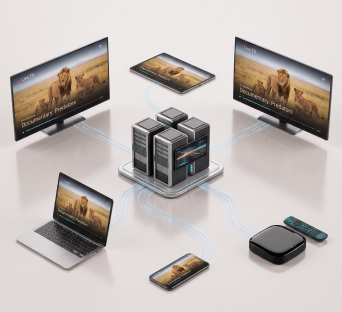
How to Expand an IPTV Platform to Web, Android, iOS, and Smart TV
For an IPTV operator, launching a service on just one type of device is rarely enough anymore. With users now watching linear channels on a TV, viewing content on a smartphone, opening catch-up content in a browser, or using an IPTV set-top box as the main screen at home, expanding a service across multiple client platforms is not simply a matter of releasing additional apps.
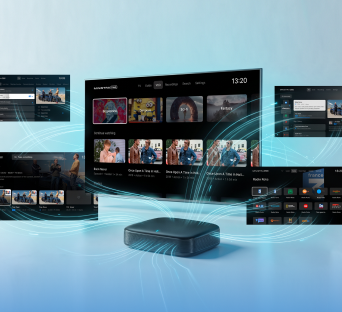
All Content in One Service: Live TV, VoD, Radio, Archive, TimeShift, and EPG in Ministra PRO
A television service has long been more than just a list of channels. Viewers now want to watch live broadcasts, return to a missed program, pause a show, schedule recordings of individual episodes or an entire series using nPVR, or choose a movie from a catalog. At the same time, all these capabilities should feel like parts of a single media environment rather than separate systems.
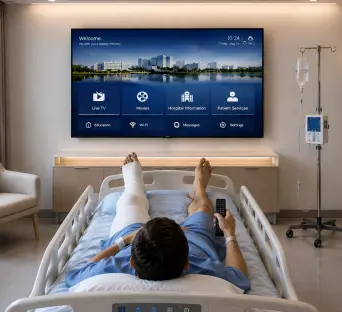
IPTV and the Modernization of Hospital Digital Infrastructure
Because hospitals operate around the clock, it's essential that their digital infrastructure supports stable departmental operations, data security, internal communications, and patient comfort. As a result, a hospital’s digital infrastructure requires a stricter approach than the infrastructure of a hotel, office, or residential complex.