


Product request
You are looking for a solution:

Select an option, and we will develop the best offer
for you


Low-Code and No-Code Solutions for IPTV: Myth or a New Stage of Automation?

IPTV/OTT services are becoming more complex, with operators having to manage not only TV channels, but also VOD, archives, tariffs, devices, user applications, billing, events, statistics, and support. And the more screens and viewing scenarios subscribers use, the more manual operations the operator’s team has to handle.
Against this background, low-code and no-code look like a logical next step. They promise to speed up the launch of new tariffs, simplify service management, and reduce dependence on development in day-to-day tasks. But in IPTV, it's important to immediately separate real backend automation from a marketing promise.
Low-code and no-code don't replace the network, headend, DRM, CDN, middleware, or engineering design. Instead, they help automate repetitive processes within an already established platform.
So the question is not whether it is possible to create IPTV without code, but rather, which processes can an operator safely move into administrative interfaces, templates, rules, and integrations, and which must remain the responsibility of the technical team?
What low-code and no-code mean in IPTV
No-code means configuration without programming. The operator uses an administrative panel, ready-made forms, switches, templates, rules, and visual settings. In IPTV, this can include creating tariffs, connecting service packages, managing accounts, publishing content, configuring the home screen, or sending messages to users.
Low-code means configuration with minimal development involvement. It's usually built around APIs, configuration files, ready-made integrations, automation scenarios, and prebuilt modules. In IPTV, low-code is especially important where the platform needs to be connected to billing, CRM, a hotel management system, external analytics, or monitoring.
The main difference from traditional development is that the operator does not create every process from scratch. The platform already contains the basic management mechanisms, and the team configures them for a specific commercial and operational model.
Why IPTV remained an engineering domain for so long
Historically, IPTV has been a technically complex field. For a service to run reliably, signal reception and processing, encoding, transcoding, stream delivery, content protection, networking, user devices, applications, and monitoring all need to be configured correctly. An error at any level can lead to playback problems, such as a channel not opening, the archive not working, or a device that can't be authorized.
For this reason, even small changes used to require the involvement of the technical team, often for long periods of time. Adding a new package, changing access, connecting a device, or launching an additional scenario usually meant going through engineers, integrators, or developers.
With the development of middleware, some of these operations began moving into administrative panels. The operator still needs an engineering architecture, but day-to-day service management has become more accessible to operational, commercial, and content teams.
Where no-code already works in IPTV
In IPTV, no-code is often not called by that name. In practice, it exists as an administrative panel, a service management system, or middleware tools. The operator opens the interface and performs actions without programming: creates an account, assigns a tariff, connects a package, restricts access, publishes content, or checks user activity.
This kind of OTT platform automation is especially useful for repetitive tasks. For example, a team can create tariff plans, build IPTV, VOD, and radio packages, set device limits, manage account statuses, add users to groups, send messages, view activity logs, and review basic viewing statistics.
For the operator, this means that some processes no longer need to go through development. Instead, the commercial team can test tariff offers faster. Support can check account and device status more quickly. The content team gains more independence when working with the catalog, and the technical team is freed from routine manual operations to focus on platform stability.
Where low-code is especially useful
Low-code becomes important where cloud IPTV platforms need to interact with external systems. For example, an operator may need billing to automatically activate a tariff in the IPTV service once a subscription is paid, or access to channels may need to be closed automatically when a service is disconnected. In a hotel scenario, the management system can send a check-in event, and the IPTV platform automation can activate the service in a specific room.
These scenarios cannot be described as fully no-code, because they require an understanding of APIs, data, events, and exchange logic. But if the platform provides ready-made integration points and a clear setup structure, the amount of development work is reduced.
Low-code is also useful for external analytics and monitoring. The operator can send viewing data, server status, device status, or errors to external systems so that the technical team can see problems faster and respond to load growth. Here, automation does not replace engineers, but it helps them work with data more quickly and systematically.
What can be automated on the operator’s side
In IPTV, automation is especially effective where actions are repetitive and follow clear rules. This includes subscriber processes, such as creating an account, assigning a tariff, changing status, managing devices, restricting access, and checking activity.
The second area is the commercial model. The operator can create basic and additional packages quicker, connect paid options, test promotional access, set different conditions for user groups, and manage the number of devices included in a tariff.
The third area is content operations. This includes publishing channels, working with the VOD catalog, categories, genres, content availability, EPG, and list updates. If such actions are available through the administrative interface, the content team depends less on technical support.
The fourth area is communication with users. The operator can send messages about maintenance work, service changes, subscription renewals, or channel list updates. For support, this is an important tool, because it helps warn users rather than only react to incoming requests.
The fifth and final area is diagnostics. If the interface shows the account, tariff, devices, logs, and statistics in one place, the operator can understand faster why a user cannot see a channel, connect a new device, or is encountering a playback error.
The role of middleware in IPTV automation
Middleware is the layer where low-code and no-code are most relevant. This is where content, accounts, devices, tariffs, applications, events, billing, and access come together. If the middleware is well designed, the operator gets not just a technical layer between streams and devices, but a working environment for service orchestration.
Ministra PRO can be seen as exactly this kind of IPTV/OTT middleware. The platform helps the operator manage channels, VOD, radio content, accounts, devices, tariffs, service packages, events, and user applications. This does not make the entire IPTV service “code-free,” but reduces the amount of manual work in day-to-day management.
For instance, IPTV middleware automation allows the operator to build service packages, assign tariffs, manage access to functions, control device limits, and perform remote actions through events. This is especially important for a multiscreen service where a single account may be linked to different devices and the operator needs to see and control that access within one system.
Low-code, no-code, and the application interface
Automation affects not only tariffs and accounts, but also the user interface. In IPTV/OTT, the service must be easy to understand on a TV, set-top box, smartphone, tablet, and in a browser. At the same time, the operator often needs to adapt the interface to the brand, audience, device type, or usage scenario.
A no-code approach to OTT platform development can work at the basic level: choosing a theme, logo, background, home screen structure, available sections, and the visibility of specific functions. This helps the operator configure the application for the service more quickly without deep development.
Low-code is needed where the interface depends on external systems or complex logic. This could be when different user groups must see different sections, the login screen is tied to external authorization, access to functions depends on the tariff, or when the application must operate according to special rules on a particular platform.
But deep customization of client applications, modification of complex templates, app builds for different platforms, and user experience testing still require specialists. Here, low-code and no-code help accelerate individual tasks, but they don't replace design, development, and quality control.
Where low-code and no-code do not work
The most common mistake is expecting low-code/no-code to solve the entire technical complexity of IPTV. This is impossible. These approaches don't replace network design, headend, encoding and transcoding, DRM, CDN, stream delivery architecture, load testing, or security.
If an error can affect playback, content protection, network stability, or access rights, it cannot be fully delegated to visual settings without technical control. For example, changing a tariff package can be done through an administrative panel. But choosing DRM, building a CDN, or configuring multicast requires engineering expertise.
Low-code/no-code also don't replace product strategy. An operator may quickly create ten packages, but that does not mean the user will understand which one to choose. A home screen can be configured, but it won't become convenient without a well-thought-out content structure. External analytics can be connected, but they'll be of no help if the team doesn't understand which metrics actually matter.
Risks of automation without control
The more capabilities the administrative team receives, the higher the requirements for access rights and processes. No-code tools are safe only when they operate within a well-designed system of roles, logs, and approvals.
Risks will arise using IPTV service automation tools if different employees create tariffs without a common logic, duplicate packages, accidentally open access to paid content, change settings in the production environment without testing, or break the link between billing and middleware. As a result, automation does not simplify work — it creates chaos.
That's why the operator with a low-code streaming platform needs roles and access rights to delegate who can change tariffs, manage content, works with devices, launches массовые actions, and has access to application settings. Change logs are just as important: if users lose access to a channel after a package update, the team must quickly understand who changed what.
How to understand whether an operator needs this kind of automation
Low-code and no-code become useful where the team regularly performs the same types of actions manually. If support manually changes account statuses, the technical team has to connect new tariffs every time, the content team cannot update the catalog on its own, and launching a new package takes weeks, then the processes already require automation.
Another signal is the growth of multiscreen usage. When a user watches the service on a set-top box, Smart TV, smartphone, or in a browser, the operator needs to manage devices, limits, sessions, and access centrally. Without such a system, support quickly encounters recurring questions about why a device won't connect or why a tariff is active but a channel is unavailable.
The automation provided by low-code platforms is also needed when the operator develops several directions: home IPTV, hotel service, a campus network, B2B offers, or local projects. In these scenarios, it's important to manage them through a common platform with different access rules, as opposed to creating a separate manual process for each segment.
Low-code and no-code IPTV solutions: myth or a new stage
Low-code and no-code become a myth if they are understood as a full-fledged IPTV/OTT service without engineering architecture. It's impossible to replace the network, DRM, CDN, headend, device testing, and support with a few visual settings. A video service remains a complex technical system in which errors quickly affect the user experience.
But this is truly a new stage of automation in IPTV systems if low-code and no-code are viewed as a way to simplify day-to-day management. They help create tariffs faster, manage accounts, connect options, change access, work with devices, analyze activity, and launch typical scenarios without development's constant involvement.
In a mature IPTV service, the value of workflow automation lies not in “removing code,” but in moving repetitive operations into safe interfaces and rules, allowing the technical team to be responsible for architecture and stability, while the operational, commercial, and content teams get tools for fast work within defined boundaries.
Low-code and no-code don't eliminate the technical complexity of IPTV, but they help the operator manage repetitive processes more quickly and safely after the service is launched.
The key with low-code IPTV platforms is to understand which tasks can be automated through administrative tools and integrations, and which must remain under engineering control. At the middleware level, content, accounts, devices, tariffs, applications, and events are combined into a manageable system.
Recommended
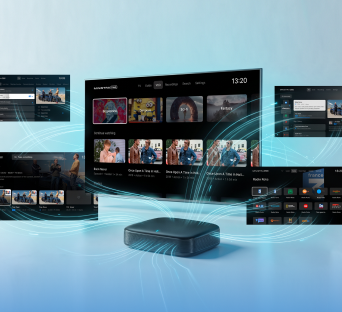
All Content in One Service: Live TV, VoD, Radio, Archive, TimeShift, and EPG in Ministra PRO
A television service has long been more than just a list of channels. Viewers now want to watch live broadcasts, return to a missed program, pause a show, schedule recordings of individual episodes or an entire series using nPVR, or choose a movie from a catalog. At the same time, all these capabilities should feel like parts of a single media environment rather than separate systems.
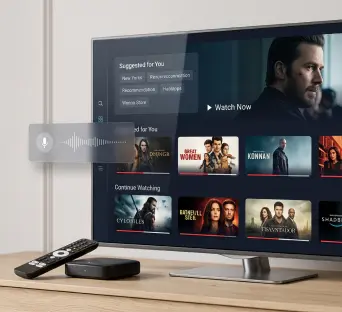
Interactive TV Trends on Google TV: What to Know in 2027
When choosing a television platform for 2027, businesses need to assess more than picture quality and the app selection. Equally important considerations are how viewers will find content, what capabilities the operator will have, and how predictably the equipment will perform after updates.
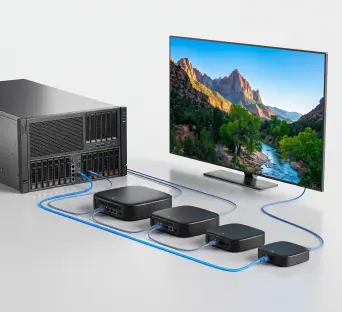
How to Reduce Video Delivery Costs Without Compromising Quality: CDN, Edge Cache, and Multi-CDN
As an IPTV/OTT service’s audience grows, so do both revenue and video delivery costs. For an operator, this means additional terabytes of outbound traffic. For a hotel, it means greater pressure on its internet connection. And in the case of maritime transport, it means the video service has to compete with other applications for limited bandwidth.