


Product request
You are looking for a solution:

Select an option, and we will develop the best offer
for you


How to Choose a Reliable IPTV Hardware Supplier: Evaluation Methodology and Procurement Risks

Choosing an IPTV hardware supplier is not a one-time device purchase, but a long-term operational decision. And a set-top box that initially looks attractive in terms of price may turn out to be expensive to operate if the supplier doesn't provide stable firmware, clear warranty terms, technical support, documentation, and confirmed certification.
For an IPTV operator, internet service provider, distributor, or integrator, it's important to evaluate not only the cost of the device, but the entire supply lifecycle: platform compatibility, updates, security, the warranty model, replacement timelines, stock availability, and transparency of contract terms.
The IPTV market continues to grow, with Fortune Business Insights recently estimating the global IPTV market at $93.26 billion in 2025 and forecasting growth to $109.34 billion in 2026. In such a market, a mistake in choosing a supplier can affect not only the procurement budget, but also service quality, user support, and the company’s reputation.
Why supplier selection affects long-term IPTV service operations
IPTV hardware operates within a connected ecosystem. A set-top box must connect correctly to the platform, receive settings, launch TV channels, VOD, archive, and EPG, support the required stream formats, update, and remain manageable after being sold to the user. Therefore, the supplier affects not only stock and purchase price, but also the technical stability of the service.
If a device is poorly compatible with middleware, the operator can face authorization errors, problems with access to packages, incorrect archive operation, and the inability to manage the device remotely. In addition, if the supplier rarely releases updates, the risk of vulnerabilities and a poorer user experience increases.
In the GOV.UK paper “Stakeholder Forum Papers: Infrastructure — IPTV ecosystem readiness,” prepared by the Infrastructure Working Group of the Stakeholder Forum, firmware updates for connected devices are considered part of IPTV ecosystem readiness.
The authors classify fragmented or inconsistent software update processes as operational risks which can create security vulnerabilities and worsen the user experience. So, when choosing an IPTV hardware supplier, it's important to check in advance how long the model is supported, how often updates are released, how the supplier fixes errors, and whether new firmware can be rolled out safely in stages.
A separate risk is dependence on the manufacturer’s roadmap. If a device is no longer supported, while the operator continues to sell it to new customers, a situation may arise in a few years where the set-top box fleet is still being used by subscribers, but fixes, security updates, and new features are no longer available. That's why a reliable supplier should be able to explain not only the specifications of the current model, but also its support period, update rules, and end-of-life policy.
Certification and compliance with market requirements
Product certification verification is one of the first stages in evaluating an IPTV hardware supplier. This is not about a formal checkbox in a presentation, but being able to confirm that a specific device model can be legally supplied and used in the target region.
The buyer should request declarations of conformity, test laboratory reports, documents on electromagnetic compatibility, safety, radio modules, power adapters, and, where applicable, proof of compliance with CE, UKCA, FCC, or local equipment authorization requirements. For Great Britain, when placing products on the market, it's necessary to comply with UKCA or CE requirements depending on the period and product category, while supply chain participants must retain documentation and maintain product compliance.
It's necessary to check not only whether a certificate exists, but also how it relates to the actual device. The documents must match the model, hardware revision, radio modules, power supply, and manufacturer. If the supplier sends a generic certificate for a “similar device,” this doesn't reduce the risks. Devices with Wi-Fi, Bluetooth, or other radio modules should be checked carefully, because requirements for such products are usually stricter.
A reliable supplier will be able to provide regulatory compliance documentation in advance, explaining which markets the device has been prepared for, as well as confirming the origin of the shipment. If the documentation is incomplete, contradictory, or provided only after payment, this is a signal for additional verification.
Firmware lifecycle management and update policy
Firmware determines how a device works after sale: how it connects to the service, processes video, receives updates, responds to errors, and how quickly the supplier fixes problems. Because of this, evaluating an IPTV set-top box supplier should always include checking the firmware lifecycle.
From a buyer's point of view, they need to understand how long the model will be supported, how often updates are released, whether security fixes are available, how over-the-air updates are delivered, whether a new version can be tested on a limited group of devices, and whether there is a rollback mechanism.
For a professional IPTV project, the important factor is not simply the availability of updates, but the manageability of the process. An unplanned mass firmware installation can create more problems than it fixes.
It's also worth requesting the support termination policy. If the supplier doesn't explain how many years the device will receive fixes, when the model will become obsolete, and how the existing fleet will be supported, the operator effectively takes these risks upon itself.
In projects using Ministra PRO or another middleware platform, firmware testing should include real scenarios: authorization, device binding, tariff handling, launching TV channels, VOD, archive, EPG, error handling, remote actions, and channel list updates.
For professional IPTV set-top boxes, including MAG, evaluation should not be limited to processor, memory, and network interfaces. It's also important to check firmware support, documentation, platform compatibility, and update predictability.
Technical support and service-level expectations
A reputable supplier should be able to meet reasonable SLA expectations. A supplier should be clear and predictable, not only at the point of sale, but also after delivery. Technical support affects launch speed, the number of internal requests, first-line support operations, and the operator’s ability to resolve incidents quickly.
When evaluating a supplier, it's important to discuss the after-sales support model, including response time, the escalation process, the availability of technical documentation, access to engineers, team training, log transfer format, and rules for handling mass issues in advance. Bear in mind that if the supplier responds only through a sales manager and there is no engineering escalation, complex issues can remain unresolved for weeks.
For the procurement team, it's important to distinguish marketing support from operational support. Marketing materials help make a decision, but they don't replace instructions for setup, diagnostics, updates, warranty repair, and interaction with the platform. A good supplier should help the operator’s team not only buy the device, but also implement it in the working infrastructure.
Warranty and return process
The warranty model directly affects operating costs. Even reliable devices can fail, be damaged during delivery, or require replacement. If the return process is not transparent, the operator faces downtime, customer dissatisfaction, and additional stock-related costs.
Before procurement, it's worth clarifying the warranty period, what qualifies as a warranty case, how devices that are faulty upon receipt are handled, who pays for delivery, where diagnostics take place, whether repair or replacement is faster, and how long the full return cycle takes. If the supplier works only through a central warehouse in another country, the replacement timeline may be too long for a mass service.
For an operator or integrator, it's important to keep a stock of devices for quick replacement. A supplier that can offer a clear RMA process, predictable timelines, and availability of spare batches reduces the load on support and helps maintain service quality.
Grey market and OEM supply risks
OEM supply is a model in which a device is manufactured by one company, but may be sold under another company’s brand or used as the basis for a customized product. In the IPTV segment, this model can work, but only if the buyer understands who is actually responsible for firmware, certification, updates, warranty, and long-term device availability.
The grey market and non-transparent OEM supply often look attractive because of price. However, procurement savings can quickly disappear if the device lacks confirmed certification, official firmware, long-term supply stability, and warranty support.
The main grey market risks revolve around lack of transparency. The buyer doesn't always understand which region the batch was produced for, who is responsible for updates, which firmware version is installed, who will confirm the warranty, and whether the next shipment will be available. Sometimes devices may have a similar casing and stated specifications, but differ in hardware revision, radio modules, bootloader, or firmware restrictions.
The OEM model itself is not a problem if the supplier transparently describes the responsibilities of the parties. The risk arises when there is no clear manufacturer, firmware roadmap, technical support, certification package, or contract that defines obligations for quality, warranties, and delivery timelines.
Price, procurement structure, and supply stability
The lowest price doesn't always mean the best procurement decision. The real cost of IPTV hardware consists of the device price, integration, testing, updates, support, returns, stock reserves, delivery, certification, and replacement of faulty devices. Grand View Research forecasts that the global set-top box market will grow from $27.1 billion in 2026 to $30.5 billion by 2030, so long-term model availability and repeatability of supply remain important factors for procurement teams.

As part of any thorough IPTV hardware supplier evaluation, the buyer needs to assess the minimum order quantity, wholesale price tiers, production timelines, currency risks, accessory availability, repeat shipment forecasts, and long-term contract terms. If a supplier offers a low price but can't confirm production timelines and future device availability, such procurement is poorly suited to an operator with a growing subscriber base.
When entering new regions, local certification, import procedures, customs timelines, warehousing, and service support are all added to these risks. For example, when distributing IPTV equipment in Africa, it's essential to account in advance for the fact that countries in the region differ in device authorization requirements, taxes, logistics, and the model of working with local partners.
Special attention should be paid to models designed for higher video quality and a long lifecycle. For example, according to Grand View Research, the 4K set-top box segment is expected to grow from $2.9 billion in 2026 to $4.1 billion by 2030.

This means the supplier should not only meet the current need, but also have a clear device lineup for future requirements related to video, performance, and codecs.
What matters to different types of buyers
There is no universal supplier evaluation criteria, because different buyers look at risks differently. An IPTV operator first checks middleware compatibility, firmware stability, remote diagnostics, support for archive, VOD, EPG, and device management. For this buyer, supplier reliability is measured by how stable the device is in the real subscriber environment.
An electronics distributor evaluates supply repeatability, margins, warranty, packaging, local documentation, certificate availability, and return terms. For them, it's important that the product can be regularly purchased, stored, sold, and serviced without constant exceptions.
A hospitality integrator pays attention to deployment speed, interface management, the ability to restrict settings, stable operation in rooms, centralized maintenance, and compatibility with hotel scenarios. Not only does the set-top box matter, but also how quickly it can be implemented at the facility.
The procurement team looks at the contract, payment terms, responsibilities of the parties, delivery timelines, chain transparency, certification, and total cost of ownership. For the supplier, it's important to obtain not the lowest price, but a predictable procurement model with clear risks.
IPTV hardware supplier evaluation checklist
Before procurement, we would strongly recommend completing an IPTV manufacturer comparison using a practical verification process. It helps compare suppliers objectively and avoid making a decision based only on price.
Don’t neglect data analysis. Pay attention to the following indicators:
- Check documents on certification, safety, electromagnetic compatibility, and regional requirements.
- Match certificates to the specific model, hardware revision, power supply, and radio modules.
- Request the firmware support policy, update timelines, security fixes, and support termination rules.
- Test the device in a real environment: middleware, authorization, VOD, EPG, archive, streams, applications, remote actions.
- Evaluate the technical support structure: response time, escalation, documentation, training, and engineer availability.
- Confirm the warranty model, return process, replacement timelines, handling of faulty devices, and availability of spare batches.
- Check contract terms: minimum order quantity, price tiers, production timelines, responsibilities of the parties, payment, logistics, and repeatability of supply.
When direct procurement may not be suitable
Direct procurement from a manufacturer or large supplier is not always the best option. If a company has no technical team, certification experience, warehouse, warranty service process, or resources for testing, direct supply can create more workload than benefit.
Small volumes can also be a limitation. If the buyer doesn't meet the minimum order quantity, can't keep a device reserve, or isn't ready to handle logistics and returns independently, it may be more convenient to work through a distributor or integrator. In this case, part of the operational tasks is handled by the partner chain.
Direct procurement is suitable for companies that understand technical requirements, know how to verify documents, are ready to test devices, and can support the hardware fleet throughout its entire lifecycle.
We hope that our IPTV hardware procurement guide has shown that choosing an IPTV hardware supplier should be based on long-term stability, not simply on device cost.
A reliable supplier helps the operator reduce the risks of certification, updates, returns, incompatibility, and supply disruptions. This approach is especially important for companies that are building an IPTV/OTT service not for one season, but as a managed infrastructure with clear support, development, and quality control.
FAQ
1. What certificates should an IPTV hardware supplier provide?
The supplier should provide documents confirming compliance with the requirements of the target market: safety, electromagnetic compatibility, radio modules, power supply, and regional markings such as CE, UKCA, or FCC. It's important to check not the presence of the certificate, as well as whether the model, revision, and components match the device actually being supplied.
2. How can firmware support be checked before procurement?
You can request the update policy, release history, model support timelines, error-fixing rules, and lifecycle termination policy. It's also worth testing the update on a limited batch of devices and checking whether it's possible to roll back to a stable version.
3. Is it better to work with a manufacturer or a distributor?
A manufacturer can provide more control over the device, firmware, and long-term roadmap. A distributor may be more convenient for small volumes, the need for local stock, fast replacement, and simplified logistics.
4. What are the risks of buying from the grey market?
The main risks are non-transparent batch origin, lack of warranty, unconfirmed certification, unknown firmware, and weak support. The device may be cheaper to buy, but more expensive to operate because of returns, updates, and compatibility problems.
5. How can IPTV hardware suppliers be compared objectively?
The comparison should take into account not only price, but also certification, firmware support period, platform compatibility, warranty model, technical support, supply stability, and contract terms. To ensure that you find a reliable IPTV supplier, it's better to conduct pilot testing before a large procurement and record the results in a single evaluation matrix.
Recommended
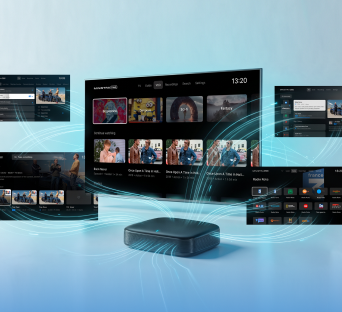
All Content in One Service: Live TV, VoD, Radio, Archive, TimeShift, and EPG in Ministra PRO
A television service has long been more than just a list of channels. Viewers now want to watch live broadcasts, return to a missed program, pause a show, schedule recordings of individual episodes or an entire series using nPVR, or choose a movie from a catalog. At the same time, all these capabilities should feel like parts of a single media environment rather than separate systems.
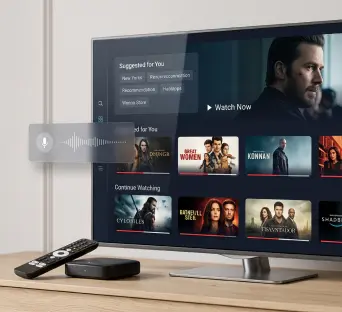
Interactive TV Trends on Google TV: What to Know in 2027
When choosing a television platform for 2027, businesses need to assess more than picture quality and the app selection. Equally important considerations are how viewers will find content, what capabilities the operator will have, and how predictably the equipment will perform after updates.
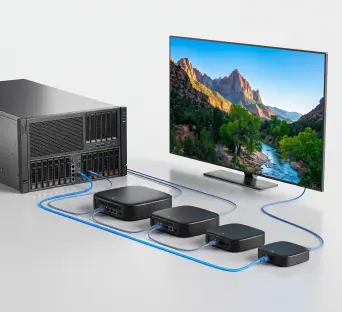
How to Reduce Video Delivery Costs Without Compromising Quality: CDN, Edge Cache, and Multi-CDN
As an IPTV/OTT service’s audience grows, so do both revenue and video delivery costs. For an operator, this means additional terabytes of outbound traffic. For a hotel, it means greater pressure on its internet connection. And in the case of maritime transport, it means the video service has to compete with other applications for limited bandwidth.